
Bloating after lunch. A heavy, sluggish morning. A stomach that reacts to every trip, every spicy meal, every stressful week. If this sounds like you, you are in good company. Digestive discomfort is one of the most common reasons people look for natural care.
Ayurveda, India’s traditional system of health, has studied this problem for thousands of years. It does not treat the gut as a stand-alone organ. It sees digestion as the base of your energy, mood, sleep, and even your skin. The ayurveda digestion gut health tips in this guide are simple enough to start this week, whether you live in Lucknow, London, or Los Angeles.
You will learn what agni is, how to spot weak digestion, which kitchen remedies are worth trying, and how to protect your gut while living abroad. This is general education, not medical advice. For more calm, practical reading, browse our health and healing articles or learn more about DeshSansaar.
Why Ayurveda Treats Digestion as the Root of Health
In Ayurveda, food is not just fuel. It becomes the raw material for every tissue in your body. When digestion is strong, the body builds well. When digestion is weak, food is only half processed, and the leftovers are believed to cause trouble far from the stomach: tiredness, dull skin, low mood, and stiff joints.
This is why Ayurvedic doctors often ask about your meals, bowel habits, and sleep before they ask about your main complaint. The gut is the first place they look.
A Quick Word on Modern Research
Ayurveda is an old tradition, and not every claim has been tested in large modern trials. The National Center for Complementary and Integrative Health explains that Ayurvedic care rests on diet, lifestyle, herbs, and daily routines, and it notes that product quality can vary, so speaking with a healthcare provider first is wise.
Still, many Ayurvedic habits match what gut researchers now say: regular meals, plant-rich cooking, good sleep, and lower stress all support a healthy gut. Fermented foods also have a place. This probiotics overview shows what is known and what is not.
The Agni Ayurveda Concept, Explained Simply

What Is Agni?
Agni means fire. In Ayurveda, it is the digestive fire that breaks down food, absorbs nutrients, and turns what you eat into usable energy. Think of a campfire. A steady fire burns wood cleanly. A weak one smokes. A wild one burns too fast and leaves a mess. Your digestion works much the same way.
The agni ayurveda concept is the heart of every gut tip in this guide. Almost every remedy aims to do one of two things: kindle a weak fire or calm an overactive one.
The Four Types of Agni
- Sama agni: balanced. Good appetite, regular bowels, and a light feeling after meals.
- Vishama agni: irregular, linked to Vata. Appetite swings, gas, bloating, and a mix of constipation and loose stools.
- Tikshna agni: sharp, linked to Pitta. Strong hunger, acid reflux, a burning feeling, and loose stools.
- Manda agni: slow, linked to Kapha. Heaviness, low appetite, sluggishness, and slow bowels.
Signs of Weak Digestion and Ama
When agni is low, Ayurveda says food is left undigested and forms ama, a sticky, heavy residue. Common signs include a coated tongue in the morning, bad breath, gas, a heavy feeling after eating, unusual tiredness, and stools that stick to the toilet bowl. If you notice several of these often, start with the habits below.
Want to see how a full digestive reset is structured by Ayurvedic experts?
Ayurvedic Remedies for Digestion You Can Try at Home
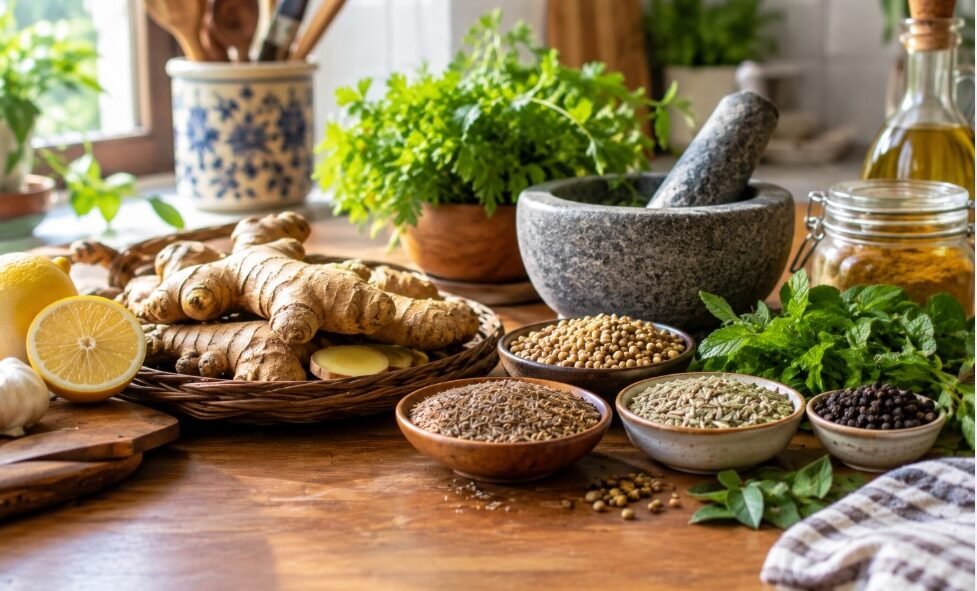
These ayurvedic remedies for digestion use ingredients found in most kitchens. Start with one or two, not all at once, and watch how your body responds.
Ginger Before Meals
Cut a thin slice of fresh ginger, add a few drops of lemon juice and a pinch of rock salt, and chew it ten minutes before lunch or dinner. Ayurveda uses this to wake up appetite and prepare the stomach. Skip it if ginger worsens your reflux or if you have an active ulcer.
Cumin, Coriander, and Fennel Tea
Boil half a teaspoon each of cumin, coriander, and fennel seeds in two cups of water for five minutes. Strain and sip it warm through the day. This mild tea is a classic household remedy for gas and heaviness, and most adults can drink it daily.
Spiced Buttermilk at Lunch
Takra, or thin buttermilk, is praised in classical texts for digestion. Blend fresh curd with water, add a pinch of roasted cumin and rock salt, and have a glass with lunch. Avoid it at night, and skip it if dairy upsets you.
Ajwain and Hing for Gas
Chew a pinch of ajwain (carom seeds) with a little warm water, or add a tiny amount of hing (asafoetida) to your dal and vegetables. Both are traditional answers to bloating.
Triphala at Night, With Care
Triphala blends three fruits: amla, haritaki, and bibhitaki. Many people take it in the evening to support regular bowels. It can loosen stools, so begin with a small dose. Avoid it during pregnancy, and ask your doctor first if you take regular medicines. Buy only from brands that share lab testing.
Foods That Support and Strain Digestion
Favor
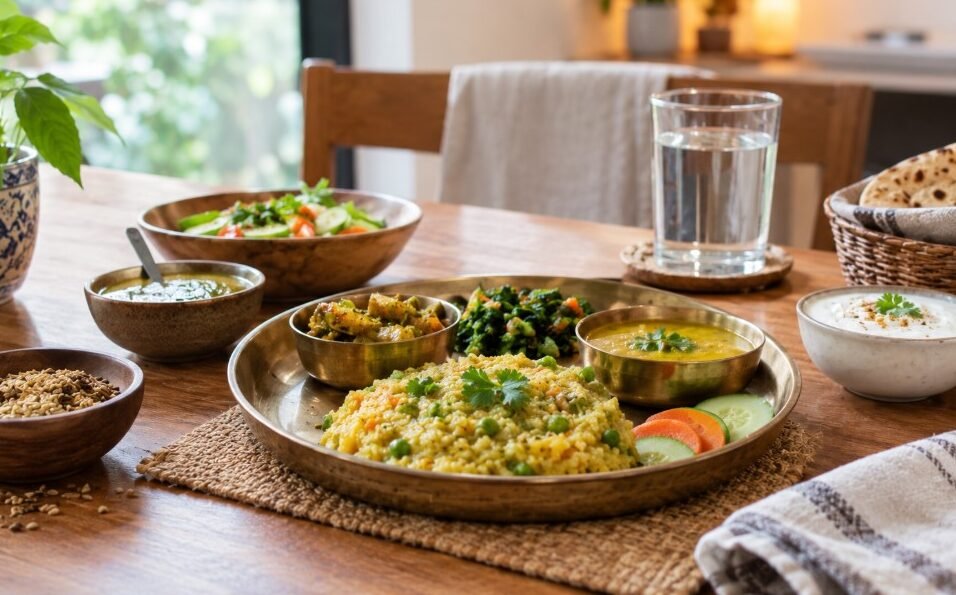
- Warm, freshly cooked meals
- Moong dal, rice, and khichdi when your stomach feels fragile
- Cooked vegetables such as bottle gourd, pumpkin, and carrot
- Ghee in small amounts
- Homemade curd or buttermilk at lunch
- Spices such as cumin, turmeric, fennel, and ginger
Foods to Limit
- Ice-cold drinks with meals
- Leftovers kept for several days
- Heavy fried and highly processed food
- Odd pairings, such as milk with sour fruit or fish. Ayurveda calls these viruddha ahara, and the advice here is traditional rather than proven
- Late-night eating
Daily Habits That Protect Your Gut

Remedies help, but habits do the heavy lifting. These are the changes Ayurvedic practitioners ask for first.
Eat at Regular Times
Your gut likes rhythm. Try to eat breakfast, lunch, and dinner at about the same times each day. Make lunch your biggest meal, since digestion is considered strongest around midday, and keep dinner light and early.
Eat Slowly and Without Screens
Sit down, chew well, and put the phone away. When you are distracted, you swallow more air and eat more than you need. Your gut gets mixed signals.
Stop at Two-Thirds Full
Ayurveda suggests filling about half the stomach with food, a quarter with liquid, and leaving the rest empty. You do not need to measure. Just stop before you feel stuffed.
Leave Gaps Between Meals
Wait three to four hours between meals. Constant snacking keeps the gut busy and gives it no time to rest and clear up.
Take a Short Walk After Eating
A slow ten-minute walk after meals helps food move along. Traditional advice calls this shatapavali. It is free and works almost anywhere.
Protect Your Sleep and Calm Your Mind
The gut and brain talk to each other all day. Poor sleep and constant stress can slow digestion or speed it up too much. A regular bedtime, five minutes of slow breathing, and time outdoors all help. For gentle routines to follow through the week, see our daily care support section. If you are caring for an older parent, our aging and chronic care guidance page may help too.
Natural Gut Health Tips by Dosha
Ayurveda says no single diet suits everyone. Your natural body type, or dosha, shapes how your gut behaves. These are broad starting points, not a diagnosis.
- Vata types (irregular, gassy): Favor warm, soft, cooked food with a little ghee. Avoid skipped meals and cold salads.
- Pitta types (sharp, acidic): Favor cooling foods such as cucumber, coriander, and sweet fruit. Go easy on chilli, fried food, and alcohol.
- Kapha types (slow, heavy): Favor light, warm, spiced meals. Cut back on heavy dairy, sweets, and late dinners.
Not sure which type you are? A guided check can save months of guessing. MorningSun offers an online virtual dosha assessment that you can complete from anywhere.
Once you know your dosha, your meals can follow a plan instead of guesswork.
Natural Gut Health Tips for NRIs and Travelers

Living abroad changes how you eat. Cold weather, long work hours, frozen food, jet lag, and missing home cooking can all unsettle digestion. Small fixes make a real difference.
- Cook one warm, simple meal a day. Khichdi, dal-rice, or vegetable soup with cumin works well.
- Keep a small tin of fennel, ajwain, and cumin seeds in your bag or office drawer.
- Drink warm water through the day, especially in cold climates.
- After a long flight, eat light for a day and skip heavy, oily food.
- Add fermented foods such as homemade curd or pickled vegetables in small portions.
- Hold on to steady meal times, even when work gets busy.
Many NRIs also find it hard to reach a trained Ayurvedic guide in their city. Online care can fill that gap. MorningSun has a dedicated track for Indians living overseas called online lifestyle correction for NRIs, built around diet, routine, and remote consultation.
Living outside India and want expert guidance on food and routine from afar?
The Gut and Skin Connection
Ayurveda links what happens inside the body with what shows outside. A gut that digests poorly is said to leave its mark on the skin as dullness, breakouts, or sensitivity. It is an old observation, and the gut-skin link is an active area of modern research, though it is still developing.
If skin is also on your mind, read how Advik Ayurveda explains Ayurvedic solutions for acne as a sign of inner imbalance, and how it describes truly healthy skin through an Ayurvedic lens. A calmer gut and a gentle outer routine cover both sides.
A Simple 7-Day Starter Plan
- Day 1: Start the morning with a glass of warm water. Sit down for breakfast without your phone.
- Day 2: Fix your meal times. Make lunch the biggest meal.
- Day 3: Add cumin, coriander, and fennel tea in the afternoon.
- Day 4: Try ginger with lemon and rock salt before lunch.
- Day 5: Walk for ten minutes after dinner. Keep dinner light and early.
- Day 6: Have a glass of spiced buttermilk with lunch.
- Day 7: Review. Note your energy, bloating, sleep, and bowel habits. Keep what helped.
Keep a small notebook. Digestion improves slowly, and notes show patterns that memory misses.
When to See a Doctor
Home remedies are for mild, everyday symptoms. See a doctor promptly if you notice blood in your stool, black stools, unexplained weight loss, ongoing pain, trouble swallowing, vomiting that does not stop, or a change in bowel habits that lasts more than a few weeks. The National Institute of Diabetes and Digestive and Kidney Diseases offers clear guidance on digestive conditions. Ayurveda works best alongside proper medical care, not in place of it.
Conclusion
Good digestion is not about a perfect diet. It is about a steady fire: regular meals, warm food, slow eating, enough sleep, and a few helpful spices. Start with two habits this week and add more as they settle. Your gut tends to reward patience.
Ready to go further?
Plan a cleanse that matches the season and your body.
FAQs:
Agni is the digestive fire that breaks down food, absorbs nutrients, and turns meals into energy.
Cumin, coriander, and fennel tea, ajwain, and a short walk after meals are common, gentle options.
Mild symptoms often ease within two to four weeks of steady habits. Results vary from person to person.
Yes. Most ingredients are easy to find, and habits like regular meals and warm food need no special products.
Many adults use it short term, but avoid it in pregnancy and check with your doctor if on medicines.
See one for blood in stool, weight loss, severe pain, or symptoms lasting beyond a few weeks.