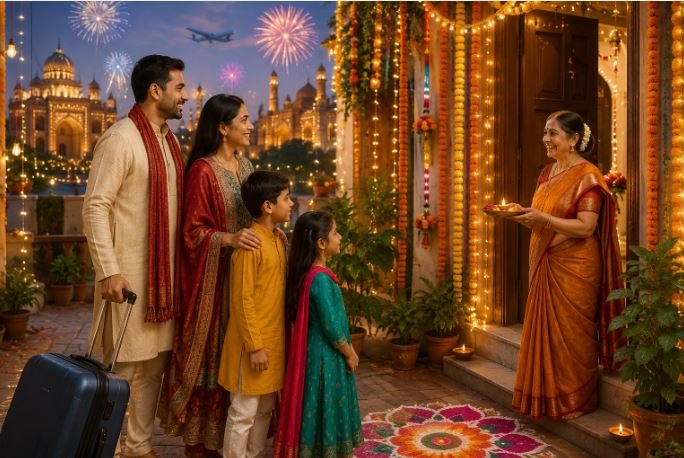
There’s a particular kind of trip home that feels different from all the others — the one timed around Diwali, or Durga Puja, or a family wedding season, where the whole visit is built around being there for something specific rather than just being there. It usually takes more planning, costs more, and is worth every bit of the extra effort.
Planning India visit around festivals means juggling a few more variables than an ordinary trip home: flight prices that spike well before the dates, family calendars that fill up fast, and festival timing that shifts every year with the lunar calendar. Get the timing right, and the trip becomes one of the best versions of “going home” there is. Get it wrong, and you can end up flying in right after the celebrations wrapped up, or missing the specific ritual that mattered most to you.
This guide walks through how to time it, what to expect by season, and how to make a short trip count when a festival is the whole reason you’re going.
Why Timing a Visit Around a Festival Changes Everything
A regular visit home revolves around family availability. A festival visit revolves around a fixed date on the calendar that everyone else is also trying to be there for — which means flights fill up faster, prices climb earlier, and family homes get busier and more crowded than usual.
The upside is worth the extra planning. Being present for the actual festival — not a description of it over video call, but the smell of the food, the noise of the celebration, the specific chaos of a house getting ready — is a different experience entirely from a regular visit. It’s often the visits people remember most clearly years later.
Planning India Visit Around Festivals: Where to Start
Planning India visit around festivals works best as a sequence, rather than trying to sort flights, leave, and family logistics all at once.
- Pick the festival first, not the dates you happen to have free — festivals move on the lunar calendar, so the actual date changes every year.
- Check the exact date at least six to eight months out, since major festivals like Diwali can fall anywhere across a three-to-four-week window year to year.
- Book flights three to six months ahead if possible — festival-season fares can rise sharply in the final six to eight weeks before departure.
- Confirm with family early, since festival weeks are exactly when everyone else is also trying to coordinate visits, weddings, and gatherings.
- Build in buffer days on both ends, since festival travel within India — trains, domestic flights, roads — gets significantly busier around major celebrations.
Some families use a festival trip as a chance to go deeper into heritage sites and traditions together. Morning Sun’s cultural and heritage experiences in India covers ways to build that into the itinerary.
Best Time to Visit India for Festivals: A Season-by-Season Look
The best time to visit India for festivals depends heavily on which celebration matters most to your family, since India’s festival calendar runs almost continuously.
October–November: Diwali, Durga Puja, Dussehra
Peak festival season and peak travel season at once. Weather is generally pleasant across most of North India, but flights and family time need the earliest possible booking.
March: Holi
A shorter, more spontaneous festival that’s easier to plan around on shorter notice, though North Indian cities get especially colourful and crowded during the main days.
August–September: Raksha Bandhan, Janmashtami, Ganesh Chaturthi
A cluster of significant festivals within a few weeks of each other, particularly meaningful for families with strong regional or devotional traditions tied to specific deities.
January: Makar Sankranti, Pongal, Lohri
Regional harvest festivals that vary significantly by state, worth checking against your specific family’s regional traditions rather than a generic national calendar.
Weather is a secondary factor worth weighing alongside the festival itself — October to March tends to be more comfortable for travel across most of India than the peak summer heat or monsoon months.
Diwali Travel Planning India: What Makes This Particular Festival Different to Plan Around
Diwali travel planning India-wide deserves its own section, since it’s consistently the highest-demand festival period for NRI travel and comes with a few specific planning quirks.
- The exact date shifts by weeks each year, since it follows the Hindu lunar calendar — always confirm the current year’s date rather than assuming it matches last year.
- Flight prices for the week surrounding Diwali often peak higher than any other time of year, sometimes rivalling December holiday pricing.
- The celebration itself typically spans several days — Dhanteras, the main Diwali night, and Bhai Dooj — so a single-day visit rarely captures the full experience.
- Fireworks, decorations, and gatherings mean cities are livelier but also busier and noisier than usual, which is worth knowing if you’re travelling with very young children or older family members with sensory sensitivities.
Booking flights as early as possible, ideally six months out, is the single biggest lever for both cost and availability during this specific window.
Festival trips are also a natural moment to bring home skincare and self-care rituals as gifts. Advik Ayurveda’s toxin-free skincare and haircare range ships worldwide if you’d rather order ahead than shop while you’re there.
NRI Festival Travel Guide: Booking, Budgeting, and Family Logistics
A working NRI festival travel guide needs to account for a few costs and logistics that don’t come up on a regular visit home.
- Budget extra for gifting — festival visits typically involve more gift-giving across a wider family circle than an ordinary trip.
- Confirm accommodation early if staying anywhere beyond immediate family, since hotels near major festival hubs fill up and raise rates during peak dates.
- Plan domestic travel within India carefully, since trains and flights between cities get significantly busier and pricier around major festivals.
- Set expectations with family about how much of the visit is festival-focused versus other catching-up time, so nobody feels shortchanged.
- Consider time zones for work commitments if you’re not taking full leave — festival weeks in India don’t pause international work schedules.
Making the Most of a Short Trip Timed Around a Festival
Many NRIs can only take a week or ten days off, which means the festival visit needs to be planned with intention rather than left open-ended.
- Anchor the trip dates around the festival’s peak days, then build the rest of the itinerary outward from there.
- Prioritise the specific rituals or gatherings that matter most to your family, rather than trying to attend every event happening in the area.
- Leave at least one buffer day before flying back, since festival period travel within India can run behind schedule.
- Take the time to actually participate, not just observe — helping with preparations often creates more lasting memories than watching from the sidelines.
Festivals carry meaning well beyond the celebration itself. Desh Sansaar’s look at why Indian festivals and traditions attract global attention is worth reading before you go.
Conclusion
Planning India visit around festivals rewards early decisions — picking the festival, confirming the date, and booking flights well before the crowd does. The extra coordination is real, but so is the difference between watching a celebration over video call and actually being there for it.
Start with the festival that matters most to your family, work backward from its confirmed date, and build the rest of the trip — flights, family time, sightseeing — around that anchor point. The visits people remember longest are rarely the ones squeezed in at the last minute.
FAQs:
Ideally three to six months ahead, and even earlier — five to six months — for major festivals like Diwali, when demand and prices peak well before the actual dates.
Most Hindu festivals follow the lunar calendar, so dates shift annually. Government tourism sites and established Hindu calendar resources publish confirmed yearly dates, typically available a year or more in advance.
Generally yes, particularly for flights during the two weeks surrounding major festivals like Diwali. Domestic travel within India, including trains and local flights, also tends to be busier and pricier during these windows.
Most major festivals span several days of associated rituals and gatherings, so a longer visit — at least four to five days around the main date — typically captures more of the actual experience than a single-day visit.
Diwali tends to be the most universally accessible starting point, given its widespread celebration across most Indian communities and states, though the right choice ultimately depends on your specific family’s regional and religious traditions.
External Resources
Incredible India (Ministry of Tourism) — Official Festivals and Events Calendar