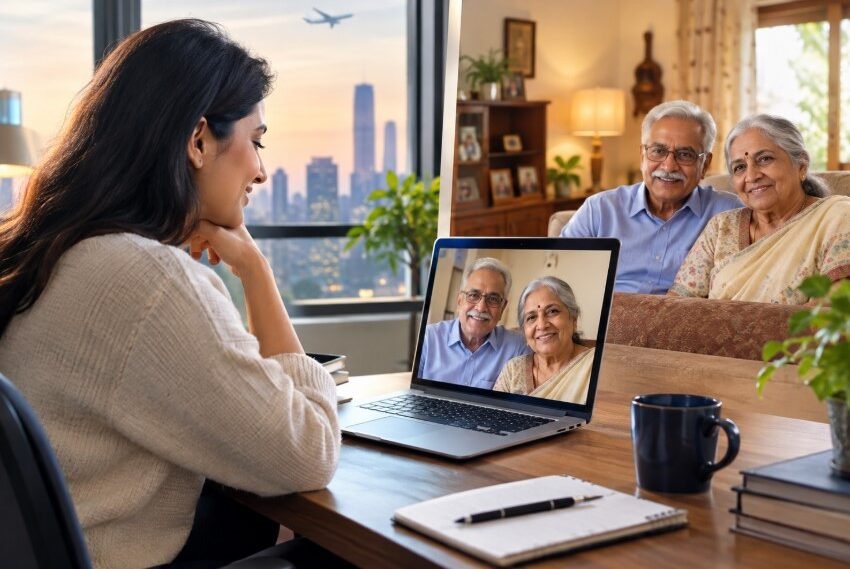
The call you’ve been dreading comes on a Tuesday. Your father has been diagnosed with diabetes and early-stage kidney disease. Your mother’s voice is calm, but you can hear the worry underneath. And you’re sitting 8,000 miles away, watching your phone screen, feeling completely useless.
This is one of the hardest situations NRIs face. Not just the illness itself — but the distance. The helplessness. Not being able to just drive over and sit with them.
You’re not alone in navigating this. Thousands of NRIs face the same situation every year, and DeshSansaar’s community of NRIs regularly shares real experiences on managing a parent’s health from abroad.
But here’s what most NRIs don’t realise: you can be deeply, practically involved in your parent’s care — even from abroad. This guide gives you a clear, step-by-step approach for supporting parents through a medical diagnosis from abroad, including how to coordinate with doctors, manage logistics, and stay emotionally present when physical presence isn’t possible.
Step One: Don’t Panic — Get the Facts First
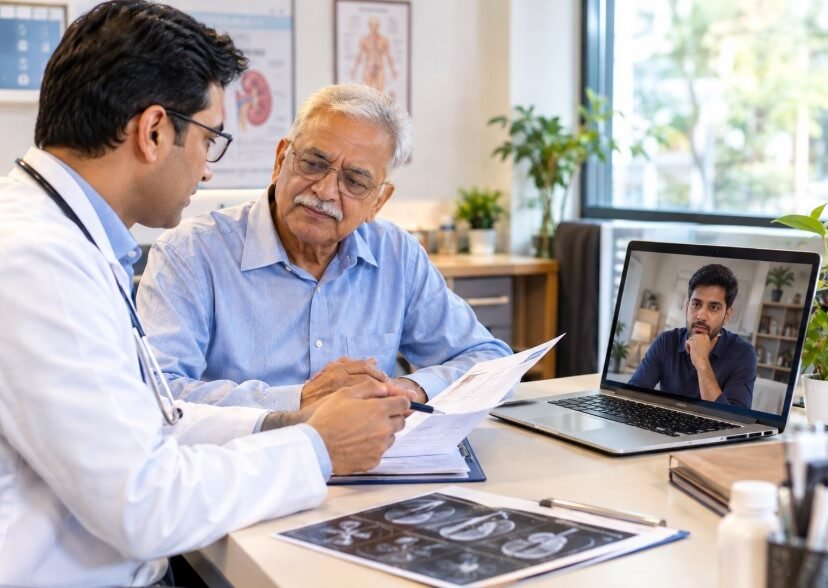
When a diagnosis comes through, your first instinct might be to book a flight immediately. Resist it. Acting from panic leads to poor decisions. Your first job is to gather accurate, complete information.
What to ask the doctor right away
Request a direct conversation with the treating physician — either by phone or video call. Come prepared with these questions:
• What is the exact diagnosis, and what stage or severity is it?
• What are the recommended next steps — investigations, medications, or procedures?
• What is the timeline? Is this urgent or can decisions be made over the next few weeks?
• Are there any specialists who need to be consulted?
• What lifestyle or dietary changes are needed immediately?
Most doctors in India are accessible and willing to speak with family abroad — especially if you explain you are an NRI. Ask the clinic or hospital coordinator to set up a scheduled video call at a convenient time across time zones.
Get all reports in digital format
Ask for scanned copies of all reports, prescriptions, and imaging results. WhatsApp, Google Drive, or email works fine. Create a folder specifically for your parent’s medical records — and keep it updated every time there is a new consultation, test, or prescription change.
This digital record becomes essential if you want a second opinion from a specialist — which, in complex diagnoses, is always a good idea.
Step Two: Build a Local Support Network in India
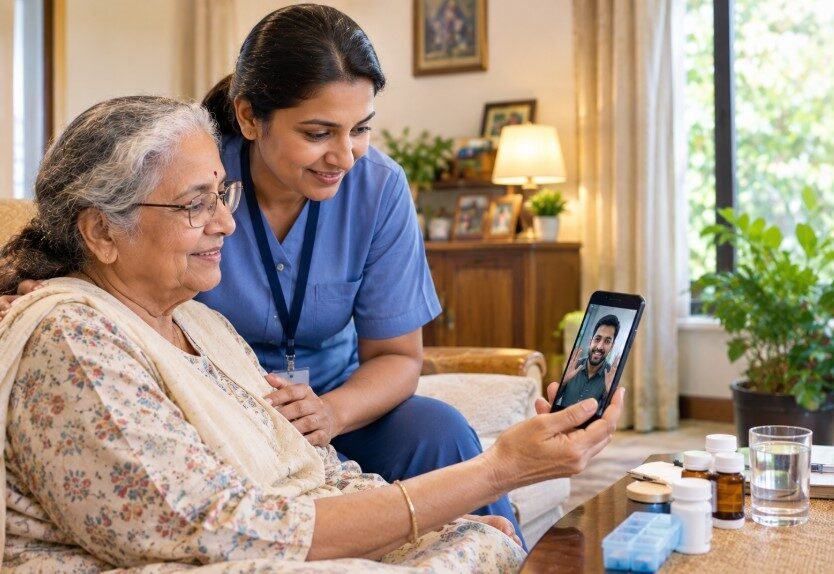
You cannot be there physically, but someone needs to be. Coordinating care remotely works only when you have trusted people on the ground.
Who should be in your support circle
Start by identifying people who can step in for you. This typically includes:
• A reliable sibling, cousin, or family friend who lives close by
• A trusted family doctor or general practitioner your parent already knows
• A local pharmacist who can help with prescription refills
• If needed, a professional caregiving service or home nurse
Once you’ve identified these people, introduce yourself properly, share your contact details, and establish a communication cadence. You might do a WhatsApp group for family updates, a separate direct line with the doctor, and a weekly check-in call with the caregiver.
When to consider professional in-home care
If your parent lives alone, or the diagnosis involves reduced mobility, cognitive decline, or post-surgical recovery, home nursing care is worth considering. Many Indian cities now have trained attendants who can assist with daily health monitoring, medication management, and physiotherapy exercises at home.
Look for verified, insured providers. Ask for references and have a video call with the caregiver before hiring. Your local support person can help with this too.
If coordinating this search feels overwhelming from a distance, MorningSun’s patient support services can help match your parent with a vetted caregiver in their city.
Small comforts matter too — gentle, toxin-free Ayurvedic skincare essentials from Advik Ayurveda can be a thoughtful addition to your parent’s daily care kit, especially for sensitive or ageing skin.
The World Health Organization’s guidance on integrated care for older adults is a useful global framework to understand what good elder care looks like — helpful when evaluating services in India.
Step Three: Staying Involved in Your Parent’s Treatment — Practically
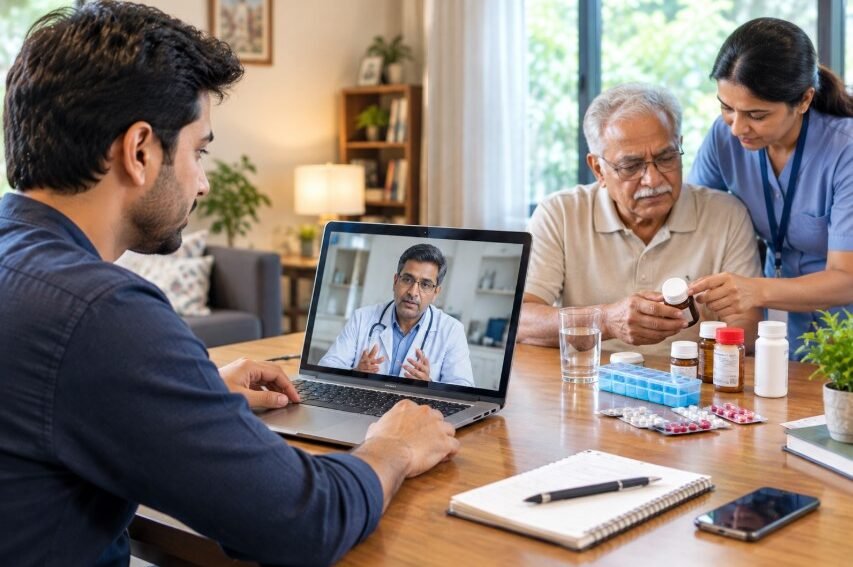
Being abroad doesn’t mean you step back from medical decisions. Staying involved in your parent’s treatment requires structure and proactive communication.
Attend appointments via video call
Most hospitals and clinics across India now accommodate video attendance for family members during consultations. Ask the doctor’s office in advance to set this up. Tools like Google Meet, Zoom, or even a regular WhatsApp video call work perfectly.
During the appointment, take notes. Ask the doctor to explain terms in plain language. Before the call ends, confirm the next steps and the follow-up date.
Create a medication tracker
Medication errors are common among elderly patients, especially when multiple medications are involved. Build a simple medication chart — name of medicine, dose, timing, and purpose — and share it with your parent and their local caregiver.
Set reminders on their phone or ask the caregiver to assist with daily medication routines. Apps like MedSafe or simple Google Calendar reminders work for digitally familiar parents.
Review lab reports together
When new test results arrive, schedule a call to go through them together with your parent. This keeps them informed, reduces anxiety, and helps you catch anything that needs follow-up. You can use Google Lens or translation tools if reports are in Hindi or a regional language.
India’s government-backed telemedicine platform eSanjeevani allows patients across India to access free online consultations with government doctors — useful for routine follow-ups, especially in smaller towns where specialist access is limited.
Step Four: Managing the Financial and Legal Side from Abroad
Medical costs in India can add up quickly — especially for hospitalisation, surgery, or long-term treatment. Managing finances remotely requires the right systems in place.
For a deeper look at handling money, property, and legal matters in India while based overseas, DeshSansaar’s NRI finance and legal guides are a useful starting point.
Set up a dedicated health fund
If you haven’t already, transfer a dedicated buffer amount to a bank account your parent can access for medical expenses. Consider an NRE or NRO account that allows easy transfer from abroad. Keep a separate mental or actual budget line for healthcare — don’t let it bleed into their daily expenses.
Health insurance matters
If your parents don’t have health insurance, start now. Senior citizen health policies in India now cover pre-existing conditions after a waiting period. Even basic coverage significantly reduces out-of-pocket hospital costs.
Look at cashless hospitalisation options for hospitals near your parents’ home. Check whether the policy covers daycare procedures, which are common for chronic conditions.
Medical Power of Attorney
If your parent’s condition is serious and you are the primary decision-maker, consider setting up a Medical Power of Attorney. This allows a designated person in India — a sibling, relative, or trusted friend — to make healthcare decisions on your behalf if you cannot be reached or cannot travel.
A registered lawyer can help draft this. It is a simple but powerful document that removes legal ambiguity in medical emergencies.
Step Five: Emotional Support — The Part That Actually Heals
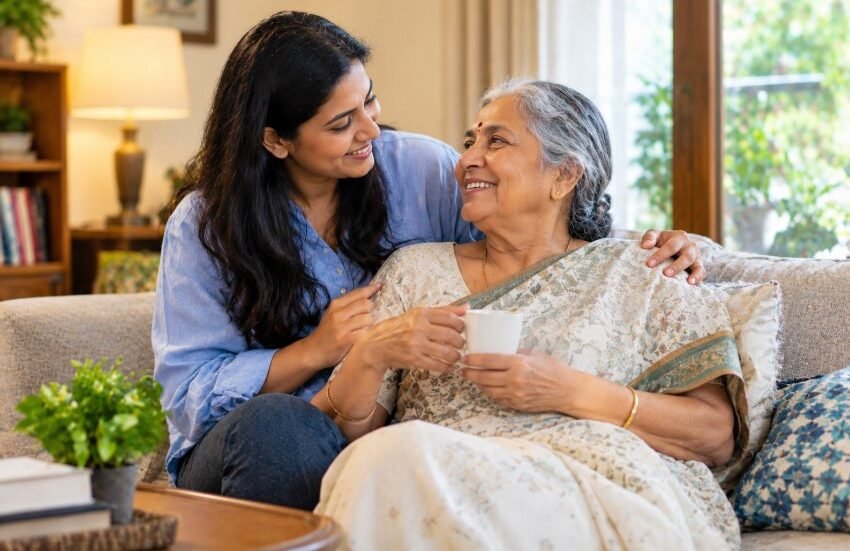
Practical logistics matter, but what your parent needs most from you is to feel loved and not alone. This is where NRI parent illness support is often most lacking — not for lack of care, but because physical distance makes emotional presence feel impossible.
Consistency beats intensity
A daily 10-minute check-in call is worth more than one marathon emotional conversation once a week. Small, regular contact builds the sense that you are with them — even when you’re not.
Small physical comforts count too — sending a gentle Advik Ayurveda skincare essential can be a quiet way of showing you’re thinking of them, even from thousands of miles away.
Ask about their day. Ask how they slept. Ask if the medication is sitting well. These small questions communicate care in ways that big, pressured conversations often don’t.
Acknowledge what they’re going through
Indian parents are rarely trained to express emotional distress. They might say “it’s fine” while clearly not fine. Acknowledge the difficulty openly — “I know this is hard, Papa. I know the diagnosis is scary.” This gives them permission to open up.
Avoid dismissing or minimising their experience. And avoid the opposite extreme — catastrophising in a way that increases their anxiety. Stay grounded and reassuring while being honest.
Plan a visit if possible — even a short one
If the diagnosis is serious, being physically present for at least a period — even two weeks — can make a significant difference. It allows you to meet doctors directly, assess the home situation, arrange longer-term care, and simply hold your parent’s hand.
Many NRIs combine such medical visits with broader health support. Some even plan structured medical stays for their parents at specialised wellness centres, particularly for post-diagnosis recovery and immunity building.
Step Six: Integrating Ayurveda and Natural Support Into Recovery
Modern medicine addresses the diagnosis. But recovery — physical and emotional — often benefits from holistic support. This is something families managing illness from afar can actively facilitate.
Ayurvedic routines — such as specific dietary protocols, herbal support for immunity, sleep, and stress reduction — can complement conventional treatment under proper supervision. Many Ayurvedic recommendations are easy to implement at home, with no hospital visit required.
For example, simple daily practices like warm sesame oil application (abhyanga), structured meal timing, and calming herbal teas can significantly improve an elderly patient’s energy and sleep quality during a difficult treatment period.
Products like the Advik Ayurveda Aloe Vera Gel can also assist patients dealing with skin sensitivity, dryness, or rashes that sometimes accompany certain medications. Pure, toxin-free Ayurvedic formulations are gentle on elderly skin — something worth keeping in your parent’s daily care kit. You can order Advik Ayurveda products online and have them delivered directly to your parents in India.
For a more structured Ayurvedic recovery programme, including Panchakarma detox, Shirodhara for stress, or a seasonal cleanse to rebuild immunity after illness, MorningSun.in’s Ayurveda for Health Conditions section covers reputable retreat centres across India.
Research published by the National Institutes of Health on complementary health approaches for older adults notes the growing evidence base for integrative approaches in managing chronic disease in elderly patients — relevant when considering Ayurvedic support alongside allopathic treatment.
Building a Long-Term Care Plan — Not Just a Crisis Response
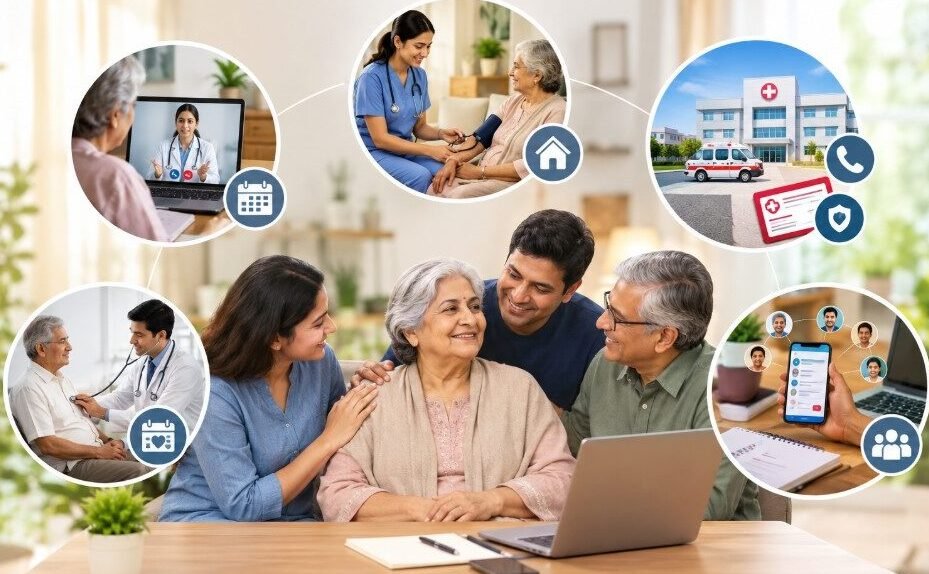
A medical diagnosis is not the end of the story. What happens next — how your parent manages the condition day to day, how they maintain quality of life, and how you stay involved — matters far more than the crisis response.
Use this moment to put a longer-term system in place. This includes:
• Quarterly specialist reviews (which you attend via video)
• Monthly home nursing check-ins if the condition requires it
• A clear protocol for what happens if there is an emergency — who calls whom, what hospital to go to, what the insurance card looks like
• Annual health check-up visits, especially for conditions like diabetes, hypertension, or cardiac issues
• A care diary or shared Google Doc where family members can log updates, questions, and medication changes
This shifts the family dynamic from reactive to proactive. Your parent feels supported. You feel less helpless. The local support network has clear roles. Everyone knows what to do.
The Bottom Line
Distance is real. But helplessness doesn’t have to be.
NRIs who manage a parent’s medical diagnosis well share one common trait: they treat it as a project, not a panic. They gather information. They build systems. They communicate consistently. They stay involved — not perfectly, but persistently.
Your parents worked hard to give you the life you have. The least you can offer in return is your informed, consistent attention — even from thousands of miles away. That attention, paired with the right local network and the right medical resources, is often more than enough.
Start with one call. One conversation with the doctor. One folder for the records. Build from there.
FAQs:
Request scanned copies via WhatsApp/email, or use hospital patient portals if available.
Yes. Request a video call link from the treating doctor or hospital.
Not always. Coordinate with a local trusted contact first, then decide.
Ask for referrals, check platforms like MorningSun, or seek a second opinion service.
WhatsApp, Google Meet, eSanjeevani, and dedicated elder-care apps work well.
Yes, especially for stress, immunity, and energy — under medical supervision.
Stay involved actively, build a local support network, and communicate daily.
Yes. A Medical Power of Attorney allows a trusted person to decide on your behalf.
External Resources
- WHO — Integrated Care for Older People (ICOPE) — Global framework for quality elder care
- eSanjeevani — India’s National Telemedicine Service — Free online consultations with government doctors across India
- NIH — Complementary Health for Older Adults — Research-backed overview of integrative approaches
- Indian Council of Medical Research (ICMR) — Authoritative clinical guidelines for major conditions in India