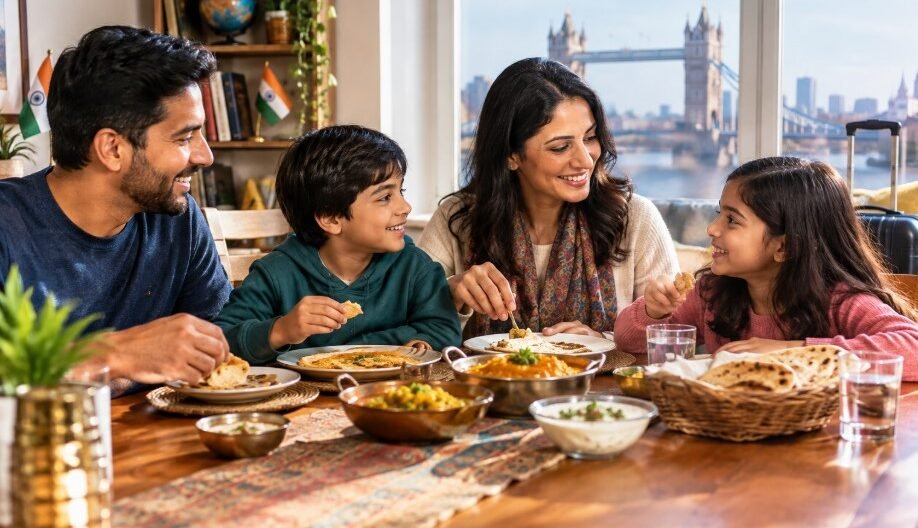
Indian food traditions abroad are not simply recipes carried from one country to another. They are living practices that change with place, generation, ingredients, work schedules, family structures and social life. For many NRIs and people of Indian heritage, a familiar meal can connect a child to a grandparent, a family to a festival, or a migrant to memories of home.
Why food becomes part of cultural identity
Food is one of the easiest cultural practices to repeat at home. A language can become difficult to maintain when children spend most of their day in another language. A festival may happen only a few times a year. Cooking, however, can happen every week. The smell of tempering spices, the sound of a pressure cooker, or the taste of a family pickle can bring cultural memory into an ordinary day.
This is why food often works alongside language, family stories and shared experiences when families are building cultural identity abroad
Research on migration and food practices also points to food as a space where identity, belonging, family relationships and adaptation meet. The important point is that cultural foodways do not stay frozen. They are negotiated and recreated in the new environment.
From inherited recipes to living foodways
A recipe written in a notebook may look fixed, but the way a family cooks it rarely is. Ingredients may change because a local grocery store does not stock the original variety. A traditional cooking method may be shortened because parents work long hours. A child may prefer less chilli. A vegetarian family may adapt a festive dish to local dietary expectations. Over time, these small decisions create a new version of the tradition.
That does not automatically make the food less Indian. Traditions have always changed through trade, migration and contact between communities. Indian cuisine itself contains layers created by geography, commerce, historical movement and cultural exchange. The same process continues when Indian families settle abroad.
How NRI cooking changes across generations
Families can also explore practical ideas around cultural identity for children
For a wider look at keeping cultural practices meaningful for children abroad, see values and belonging among children abroad
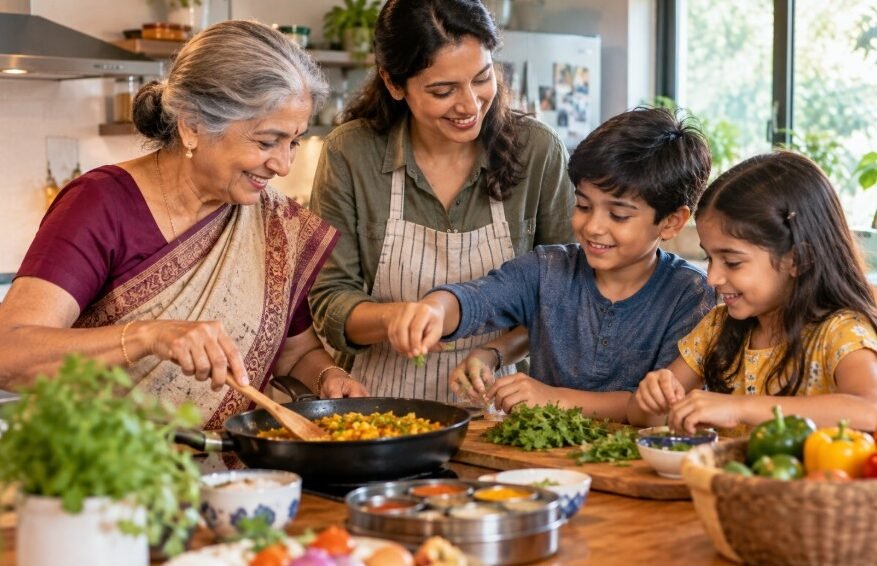
The first generation often carries detailed memories of how food was prepared at home. They may remember which spice was roasted first, which pan was used, or how a dish was prepared for a particular festival. For the second generation, the same food may be connected more strongly to family occasions than to the original regional context.
This is where NRI cooking traditional food can become an intergenerational bridge. A parent does not need to give a formal lesson on culture every time they cook. A recipe can open a conversation: Who taught you this? When did your family eat it? Which region is it associated with? Why is it made during this festival?
Families interested in this wider question can also explore language and roots for children growing up abroad, because food and language often carry family memories together.
Ingredients change, but meaning can remain
Traditional Indian wellness practices are explored further in Ayurvedic body care rituals from ancient India
Ayurvedic food traditions are also discussed through everyday kitchen ingredients in Ayurvedic remedies for indigestion and bloating
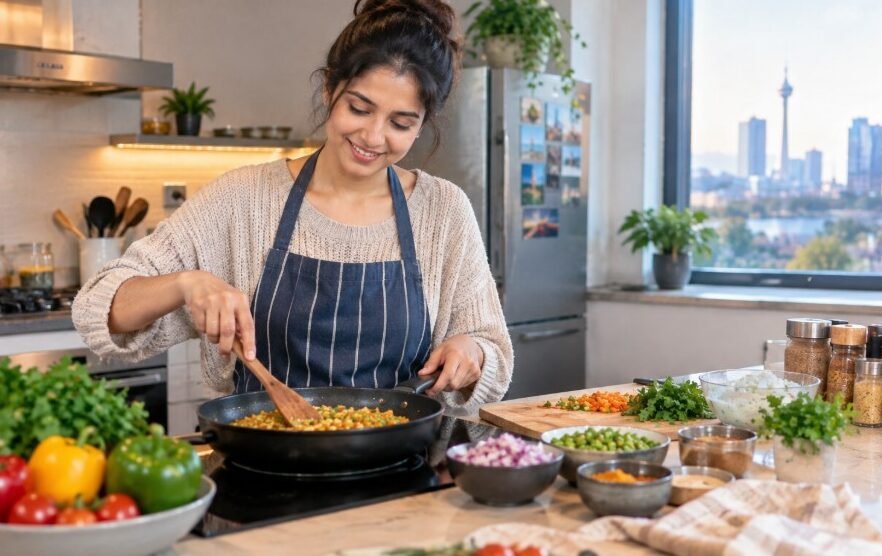
One of the clearest signs of adaptation is ingredient substitution. Fresh curry leaves may be difficult to find in a small town. A particular lentil may be unavailable. A family may use a local vegetable because it is cheaper and fresher. Someone living in a colder climate may change cooking frequency or rely more on pantry staples.
These changes are practical rather than symbolic. Yet they can produce distinctive diaspora versions of familiar dishes. A family may eventually become attached to that adapted version because it is the taste of their own household abroad.
This is an important distinction when discussing authenticity. There is no single overseas Indian kitchen. Punjabi, Tamil, Bengali, Gujarati, Malayali, Marathi, Telugu, Assamese and many other traditions travel differently. Even within one community, family recipes can vary sharply by town, caste, religion, region and household history.
Food nostalgia diaspora: why certain meals feel like home
For another perspective on staying connected to home across distance, see the experience of living abroad while parents age
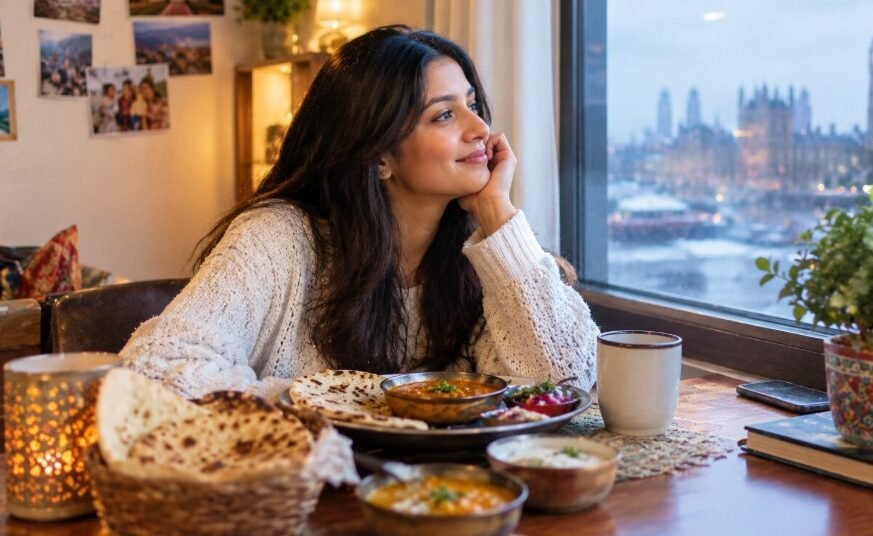
Food nostalgia diaspora is not only about missing a particular dish. It can involve missing a person, place, season or period of life. A bowl of dal may remind someone of a parent. A festival sweet may bring back school holidays. A spice blend may recall a grandmother’s kitchen.
Studies of Indian migrants have documented links between food brought from home, cooking practices, food sharing, family relationships and feelings of belonging. This helps explain why a meal can carry emotional weight beyond its ingredients.
Nostalgia can also change with time. The food someone remembers at age ten may not be exactly how the dish is prepared today. Memory tends to preserve meaning rather than precise measurements. That is why two relatives can disagree about the ‘real’ family recipe and both feel certain that their version is correct.
When preservation becomes more than copying
Preserving Indian cuisine abroad does not have to mean reproducing every dish exactly as it was prepared in India decades ago. A stronger approach is to preserve the knowledge behind the food: the story of the dish, the occasion, the regional connection, the technique and the people who passed it down.
For families, this can be as simple as recording an elder preparing one recipe. Take photographs of the process. Write down ingredient names in the family language. Ask when the dish was traditionally prepared. Note substitutions made abroad. Store the recipe with the story rather than treating it as a list of measurements.
For families thinking about belonging more broadly, values and belonging among children abroad offers a useful related perspective.
The role of restaurants and community spaces
MorningSun also brings food, wellness and cultural experiences together through its retreats and cultural experiences
For travelers who want to experience regional Indian food traditions in person, Indian culinary tours
Home kitchens are only one part of Indian food traditions abroad. Restaurants, temples, cultural associations, student groups, community events and local markets can also keep food practices visible.
Indian restaurants abroad can introduce regional dishes to people who have never visited India. They can also become gathering places for diaspora communities. The Indian Council for Cultural Relations, for example, has an Annapurna Certificate recognising restaurants abroad that contribute to promoting Indian cuisine and culinary traditions.
At the same time, restaurant menus should not be treated as a complete map of Indian food. Commercial menus naturally respond to local demand, cost and customer expectations. Home cooking often preserves dishes that are too regional, seasonal or specialised to appear regularly in restaurants.
What younger generations are changing
Younger members of the diaspora are not simply inheriting food traditions; many are remixing them. Social media makes it easier to learn regional recipes from relatives, chefs and creators across the world. Young cooks may combine a family technique with local produce, reduce cooking time, change portion sizes or explain a regional dish to friends from another culture.
This can create tension when older relatives see change as loss. Yet change can also be a form of continuity. A tradition that can only survive under its original conditions may disappear when those conditions change. A tradition that can adapt may remain part of everyday life.
For parents, the practical goal is therefore not to make children reproduce an exact version of the past. It can be more useful to give them access to stories, skills, tastes and family memories, then allow them to develop their own relationship with them.
How families can preserve food traditions abroad
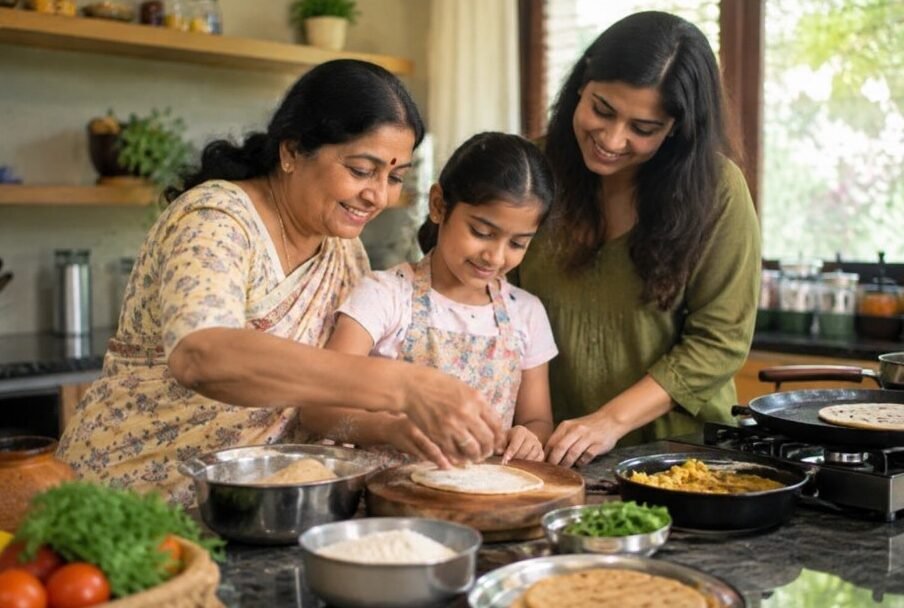
- Record one family recipe each month: Use a phone to record an elder cooking. Save the video with the recipe name, region and occasion.
- Write the story behind the dish: Note who taught it, when it was eaten and why it matters to the family.
- Teach techniques, not only recipes: Show children how to temper spices, knead dough, make a chutney or judge consistency.
- Keep regional diversity visible: Do not reduce Indian food to a short list of globally familiar dishes.
- Let children adapt: Allow milder spice, local ingredients or vegetarian changes when practical. Adaptation can keep a tradition usable.
- Cook together across generations: Use video calls or visits to let grandparents teach one small technique at a time.
A practical approach for NRIs and global Indian families
Start with three layers: memory, method and meaning. Memory asks what food reminds the family of home. Method asks how the dish is actually prepared. Meaning asks why the dish matters.
For example, a family could choose one festival dish. An older relative can explain its history. A parent can demonstrate the cooking technique. A child can record the recipe and prepare it using locally available ingredients. The result is more than a preserved recipe. It is a small family archive.
This approach also avoids turning culture into a test. A child does not need perfect knowledge of every Indian dish to have a meaningful connection with family heritage. Curiosity, participation and positive memories can be enough to keep the relationship with food alive.
Why Indian food traditions abroad will keep evolving
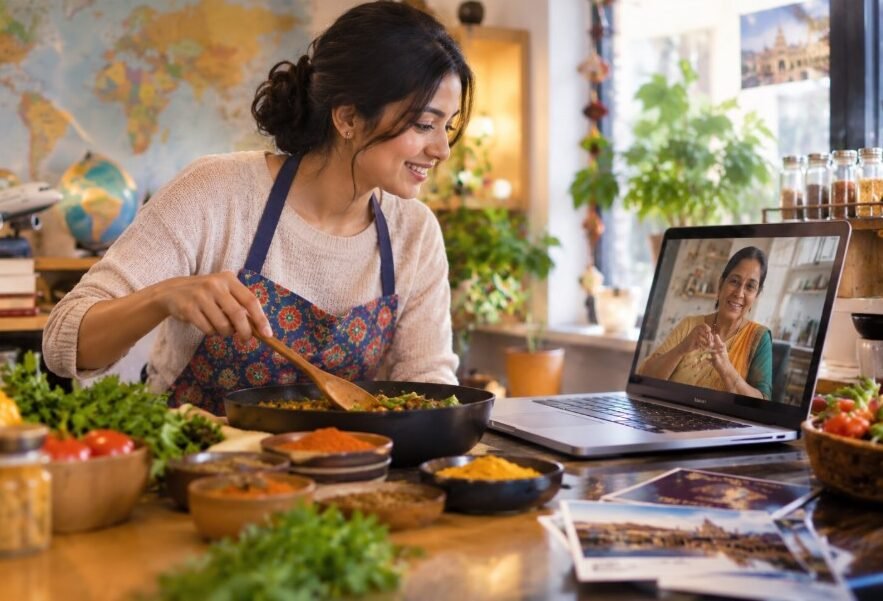
The future of Indian food abroad will probably be more varied, not less. Migration continues to connect communities. Global grocery supply makes ingredients easier to access in many places. Digital platforms let families learn recipes from distant relatives. Younger cooks are increasingly comfortable moving between cultural food traditions.
That means preservation should not be confused with freezing cuisine in time. Living traditions carry both memory and change. A dish can retain its family meaning while its ingredients, presentation or cooking process changes.
For readers interested in experiencing Indian cuisine through travel and regional food culture, Indian culinary tours and food experiences provide a complementary perspective on how place shapes Indian food.
And where food traditions intersect with everyday Ayurvedic food practices, readers can explore Ayurvedic remedies and traditional kitchen ingredients as a separate wellness-focused resource.
Related reading across the sister sites: Indian culinary tours · Ayurvedic food and digestion · celebrating Indian festivals abroad
Conclusion
Indian food traditions abroad are best understood as living culture. They preserve memories, create family rituals and help people stay connected across distance, but they also adapt to new places and generations. For NRIs and global Indian families, the most useful form of preservation is not perfect replication. It is passing on the stories, skills and meanings that make food worth remembering.
A family recipe can change and still remain part of the family. A child can create a new version and still inherit the tradition. In that sense, Indian cuisine abroad does not simply survive migration; it continues to evolve through it.
FAQs:
They are Indian cooking practices adapted and maintained by communities living outside India.
Food connects family memories, celebrations, regional heritage and everyday routines.
Record family recipes, teach cooking techniques, share stories and cook together across generations.
Not necessarily. Migration has always influenced ingredients, techniques and food traditions.
It is the emotional connection between remembered foods, places, people and experiences from home.
Invite them to cook, record elders, ask questions and adapt recipes for their own lives.
They can help sustain and share cuisine, while home kitchens preserve many regional and family-specific practices.
Recipes reflect region, community, household history, available ingredients and personal cooking styles.