
You live abroad, but India is still part of your financial life. Maybe you earn rent from a flat in Pune. Maybe you keep an NRO account, hold mutual funds, or plan to help your parents with a property. Sooner or later, someone asks for the same thing: your PAN.
A PAN card for NRIs is the key that opens most money tasks in India. Banks, tax offices, buyers and fund houses all use it to find your records. Without it, simple jobs slow down or stop.
This guide explains what PAN is, why it matters, which form to use, how to apply from abroad, and where Aadhaar fits in. It also lists the papers every NRI should keep ready. DeshSansaar writes practical guides for Indians living overseas, and you can find more in our NRI guides section.
Sorting out your India paperwork?
What Is a PAN Card, and Who Needs One as an NRI?
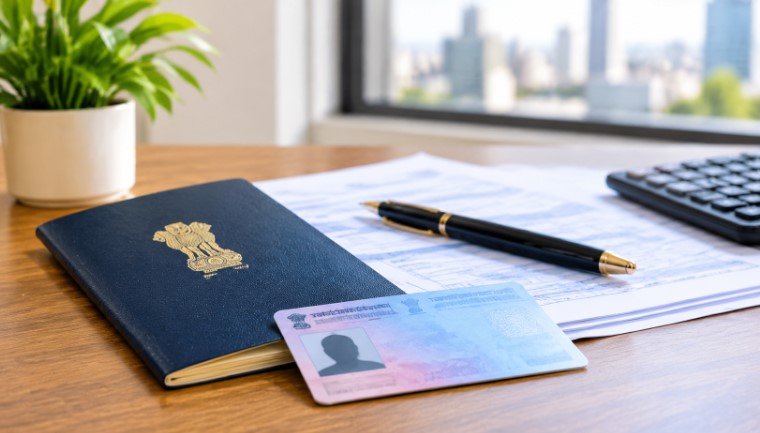
PAN stands for Permanent Account Number. It is a 10-character code issued by India’s Income Tax Department. It stays with you for life. One person should hold only one PAN.
Think of it as your tax identity. Every tax payment, refund, and large money transaction in India links back to it.
Do all NRIs need a PAN?
Not always. If you have no income, no bank account, and no investments in India, you may not need one yet. But the moment money starts moving, you will.
You will likely need a PAN if you:
- Earn rent, interest, dividends, or any other income in India
- Open or run an NRE or NRO bank account
- Invest in mutual funds, shares, or fixed deposits
- Buy or sell a house, flat, or plot
- File an Indian income tax return or claim a tax refund
Citizenship decides your form, not your address
Many NRIs get confused here. Living abroad does not make you a foreign citizen. If you hold an Indian passport, you apply as an Indian citizen. If you hold a foreign passport with an OCI card, you apply as a non-citizen. We cover both routes below.
Why a PAN Card for NRIs Matters More Than You Think

A PAN is not just a form to tick. Here is what it does for you in real life.
It keeps your tax deductions fair
When you earn money in India, the payer often cuts tax at source. If you do not share a PAN, they may have to cut tax at a much higher rate. That means less money in your hands and a longer refund process later.
It is needed for banking and KYC
Banks ask for PAN when you open NRE and NRO accounts, start fixed deposits, or update your KYC. A missing or wrong PAN can freeze these tasks.
It unlocks investments
Mutual fund houses and brokers need PAN to complete your KYC. No PAN, no investment account. It is that simple.
It matters in property deals
Property deals involve large sums and tax deductions. Both buyer and seller usually need valid PAN details. If you plan to sell an inherited flat, a missing PAN can delay the whole sale.
It works as an ID
Indian institutions accept PAN as a trusted proof of identity. For many NRIs, it is the one Indian ID they can use without being in the country.
Aadhaar for NRIs: Do You Need It Too?
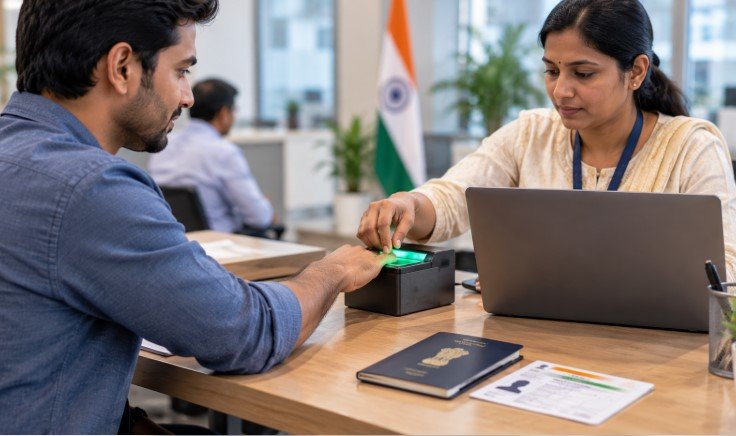
This is the most common question we hear. The short answer: Aadhaar is not compulsory for NRIs. But it can help, so let us look at both sides.
Can an NRI get Aadhaar?
Yes. NRIs with a valid Indian passport can enrol for Aadhaar after arriving in India. Your passport works as proof of identity. You will also need to give an email address, because foreign phone numbers are not accepted for this process. Check the latest steps on the UIDAI website before you visit an enrolment centre.
Is PAN-Aadhaar linking compulsory for NRIs?
Income Tax Department guidance exempts non-residents from the linking rule. There is one catch. Your PAN record must show you as a non-resident. If it still shows you as a resident, the system may treat your PAN as inoperative. Update your status in the department’s records and keep proof handy.
Should you get Aadhaar anyway?
It depends on how often you visit India. Aadhaar can make life easier if you:
- Visit India often and handle banking or property work in person
- Hold an Indian passport and want smoother KYC with Indian institutions
- Help ageing parents with forms and services that ask for Aadhaar
If you rarely visit, you can skip it. Many NRIs manage well with a correct PAN and a valid passport. One more tip: some UIDAI online services do not open from outside India, so plan any Aadhaar updates for your next trip.
Which PAN Form Should an NRI Use?
Older guides talk about Form 49A and Form 49AA. These have changed. From 1 April 2026, the new Income-tax Rules replaced them with Forms 93 to 96.
- Form 93: for individuals who are Indian citizens, including NRIs
- Form 95: for individuals who are not Indian citizens, such as OCI or PIO card holders with a foreign passport
- Forms 94 and 96: for Indian and foreign entities such as companies and trusts
So an NRI with an Indian passport uses Form 93. A US or UK citizen with an OCI card uses Form 95. On the portal, you pick the option that matches your citizenship. If you pick the wrong one, your application may be rejected.
Documents for a PAN Application from Abroad
Keep clear scans of these before you start. Blurry files are a top reason for delays.
If you are an Indian citizen living abroad (Form 93)
- Proof of identity: a copy of your Indian passport
- Proof of date of birth: your passport usually covers this
- Proof of address: a bank statement from your country of residence, or an NRE account statement
- Photo and signature: as the portal asks
If you are an OCI or PIO card holder (Form 95)
- A copy of your passport, OCI card, or PIO card as identity proof
- Your overseas address proof
- Your tax ID number from your country of residence, which is mandatory for this form
The new forms also ask for your mother’s name and your residential status. Keep your passport details ready. Rules and document lists can change, so check the Income Tax Department’s PAN page for the latest list.
How to Apply for a PAN from Abroad: Step by Step

A PAN application from abroad is done online. Two agencies handle it: Protean and UTIITSL. Both are authorised, and you can pick either.
Step 1: Choose the portal and the right form
Open the new PAN application option. Select Form 93 if you hold an Indian passport. Select Form 95 if you are a foreign citizen with an OCI or PIO card.
Step 2: Fill in your details
Enter your name exactly as it appears on your passport. Add your date of birth, parents’ names, and residential status. Pick where you want the card sent.
Step 3: Upload your documents
Upload your identity, address, and photo files. Use clear scans in the size and format the portal accepts. If the portal asks you to post signed papers to India, follow the instructions shown on screen.
Step 4: Pay the fee
Fees depend on where the card is delivered. Recent guides report about ₹107 for delivery in India and about ₹1,017 for delivery to a foreign address, both including taxes. Fees change, so confirm the exact amount on the portal before you pay.
Step 5: Save your acknowledgement and track the status
After you submit, you get an acknowledgement number. Save it. You can use it to track your application online.
Step 6: Receive your PAN
Most applicants get a digital PAN by email first. The physical card follows by post. Cards sent abroad can take a few weeks, so use the digital copy while you wait.
Money-saving tip: if a trusted family member lives in India, you can choose their address for delivery. The fee is lower, and they can send you the card later.
Not sure which papers apply to you?
Common Mistakes That Delay an NRI PAN Application
Most rejections come from small errors. Watch out for these:
- Name mismatch: your name differs from the passport by even one letter
- Wrong form: a citizen using the non-citizen form, or the reverse
- Old address proof: statements that are outdated or unreadable
- Wrong fee: paying the India delivery fee but choosing a foreign address
- Wrong residential status: this can cause trouble with PAN-Aadhaar rules later
- Applying twice: holding two PANs is not allowed and can lead to a penalty
If you already have a PAN but lost the card, do not apply again. Request a reprint instead.
Documents NRIs Should Keep Updated

A PAN is only one piece. Most NRI problems start when a document expires or a detail no longer matches. Make it a yearly habit to check the papers below.
Identity and residence papers
- Valid passport, with the same name spelling on every record
- OCI card, if you hold one
- PAN, and Aadhaar if you have enrolled
- Current overseas address proof, such as a recent bank statement or residence permit
- Proof of your tax residency in your country of stay
Money and tax papers
- NRE and NRO account details, with your KYC up to date
- Copies of your Indian income tax returns and tax statements
- Investment records, fund statements, and nominee details
- A working email and phone number linked to your Indian accounts
Property and family papers
- Sale deeds, property tax receipts, and any power of attorney
- Wills, nominations, and insurance policies
- Your parents’ ID, medical, and insurance papers, since you may need to act for them from far away
That last point matters more than most families expect. When parents age, hospital desks and insurers ask for papers fast. Our guide on ageing and chronic care support shows how families abroad can prepare in advance. You can also read our notes on everyday care support for parents.
Trips home are a good time to review everything. If your visit includes a health checkup, you can browse clinics in India on MorningSun or send an enquiry about care options before you fly, so you carry the right ID and insurance papers. If you are planning something gentler for your parents, MorningSun also covers anti-ageing and longevity care. And if you like to take natural self-care products back with you, Advik Ayurveda has a skincare range, hair care picks and bath and body products worth a look while you plan your list.
How to Keep Your PAN Safe and Working

- Check that the name, date of birth, and status on your PAN match your passport
- Update your address and residential status when they change
- Share your PAN only with banks, brokers, and offices you trust
- Never post a photo of your PAN card on social media or unknown chat groups
- Keep a digital copy in a safe folder, and share the folder location with one trusted person
If something looks wrong on your record, fix it early. Small errors are easy to correct. Old errors tied to property or tax cases take much longer. Our guide on healthcare and everyday realities in India also explains why having your papers in order helps when family needs support in a hurry.
Have a question about your own situation?
Final Thoughts
A PAN card for NRIs is a small document with a big job. It protects your tax position, keeps your bank and investment accounts running, and avoids delays in property work. Get the right form, keep your papers current, and review them once a year.
Ready to put your paperwork in order?
Read Our Documents Guide and explore more NRI-friendly help at DeshSansaar.
FAQs:
Yes. You can use your overseas address and submit a bank statement from your country of residence as address proof.
No. Aadhaar is not compulsory for NRIs, so you can usually apply for PAN without it.
An Indian citizen living abroad uses Form 93. OCI or PIO holders with foreign passports use Form 95.
Non-residents are exempt, but your PAN record must show non-resident status. Update it if it does not.
A digital PAN usually comes first. The physical card to a foreign address can take a few weeks.
No. Only one PAN is allowed per person, and holding more can attract a penalty.
Passport, PAN, overseas address proof, NRE or NRO statements, tax returns, property papers, and family insurance records.