
For many Non-Resident Indians, retirement once meant staying permanently in the country where they built their careers. That assumption is changing. Some NRIs are now considering a split-life model, spending part or most of retirement in India while keeping family, assets, or other commitments abroad.
The decision is rarely driven by one factor. It can involve family, healthcare access, housing, lifestyle, finances, social connection, and the practical question of where everyday life will feel manageable over the next 15 or 20 years.
India can offer familiarity, established family networks, a wider range of housing choices, and access to large urban healthcare systems. At the same time, moving back after decades abroad can create new issues around taxation, banking, insurance, property, visas or citizenship status, and adapting to local infrastructure.
This guide looks at the practical reasons behind the interest and the checks NRIs should make before treating India as a permanent retirement destination.
Why Retirement in India Is Becoming a Serious Option
Retirement changes the priorities that shaped a working life. Commute time and proximity to an office may no longer matter. Healthcare, family access, housing, community, climate, daily routine, and cost management can become much more important.
For an NRI who grew up in India, returning can also remove some of the friction of building a completely new social life. Language, food, festivals, familiar customs, and family relationships may make the transition easier.
But familiarity should not be confused with readiness. India may feel familiar during a three-week visit and feel very different when it becomes the place where you manage medical appointments, household repairs, banking, transport, and long-term care.
That is why NRIs retiring in Indian should approach the decision as a planning exercise rather than a single relocation event.
1. Family proximity can become more valuable
One of the strongest reasons for moving back to India after retirement is family.
An NRI may have children abroad but parents, siblings, cousins, or long-standing friends in India. Others may want to spend more time with grandchildren or support an ageing parent.
Distance can be manageable while working. It can become harder when health needs increase or when family members need practical help.
DeshSansaar’s guide on managing ageing parents from abroad explains why care becomes more complicated when family members live in different countries. The same issues can work in reverse: returning to India may make family support easier, but it does not remove the need for a clear care plan.
Healthcare Should Be a Core Retirement Decision

Healthcare deserves more attention than property photos or retirement-community brochures.
A retirement location should be evaluated based on the type of care you may need later, not only the care you need today.
- Distance to a good multispecialty hospital
- Availability of specialist doctors
- Emergency transport and response time
- Pharmacy and diagnostic access
- Home nursing options
- Physiotherapy and rehabilitation
- Mental health and counselling support
- Availability of geriatric care
- Health insurance terms and exclusions
India has dedicated public programmes for older adults. The National Programme for Health Care of the Elderly includes preventive, curative, rehabilitative, and geriatric services through different levels of the public healthcare system.
This does not mean every city or neighbourhood will provide the same experience. The practical question is whether the healthcare network around your proposed home matches your expected needs.
For NRIs planning retirement, health insurance also needs an early review. IRDAI health insurance FAQs explains current regulatory information on entry age and lifelong renewal, subject to policy terms.
Do not wait until after relocation to discover that an old overseas policy, Indian policy, or employer-linked benefit does not work the way you expected.
The Financial Side of Returning to India
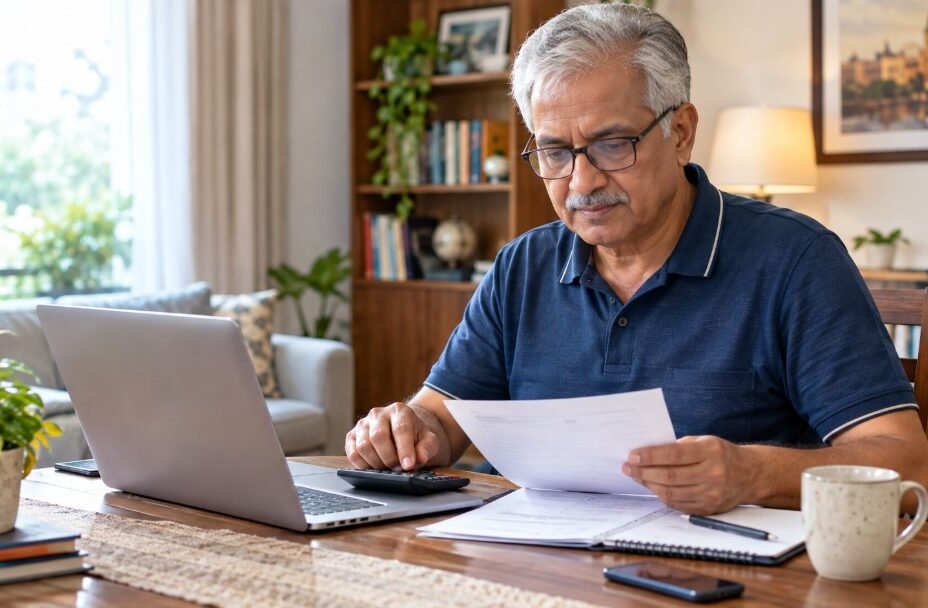
Retirement planning for NRIs is not simply a question of whether India is cheaper.
The more useful question is: how will your income, assets, taxes, insurance, and expenses work together after the move?
- A foreign pension
- Investments abroad
- Indian bank accounts
- Property in India
- Rental income
- Retirement accounts in another country
- Family financial obligations
- Insurance policies in more than one jurisdiction
The tax position can also change after a move. The Income Tax Department guidance for non-resident individuals explains that residential status is determined under the Income-tax Act based on factors including days spent in India and other conditions.
That makes a retirement move a situation where professional cross-border tax advice can be worthwhile. The rules can depend on your personal circumstances and the countries involved.
Before moving, create a simple retirement cash-flow sheet showing expected income and recurring expenses in the same currency. Then model healthcare, travel, housing maintenance, insurance, family support, and unexpected costs.
Ready to structure the financial and documentation side of your move?
DeshSansaar’s NRI planning and compliance guide can help you structure the questions around retirement, property, tax, documentation, and inheritance before making the move.
Housing: Buy, Rent, or Try Before You Commit?

Buying a home immediately is one of the easiest ways to make a retirement move harder to reverse.
A better approach for many people is to test the location first.
Consider renting for several months in the city or neighbourhood you are considering. Live through normal weekdays rather than only a holiday period.
- Traffic and transport
- Power and water reliability
- Noise levels
- Walkability
- Grocery and pharmacy access
- Hospital travel time
- Domestic help availability
- Internet reliability
- Climate during uncomfortable months
- Distance from family
- Local community
The right retirement home is not necessarily the largest house. It is the home that remains practical if mobility changes.
If you are considering a retirement community, ask what happens when residents need higher levels of care. A beautiful property is not enough if emergency response, nursing, transport, or assisted living arrangements are unclear.
What Are NRI Retirement Communities in India Really Offering?
NRI retirement communities India searches often reflect a desire for convenience rather than simply a desire to live around other retirees.
A well-designed community may offer maintenance, security, social activities, common spaces, housekeeping, healthcare coordination, or access to transport. These services can reduce the number of daily tasks that become burdensome later.
But every community is different.
Healthcare support
Is there a doctor on site? Is nursing available? What happens during an emergency? Which hospitals are used?
Fees
Separate the purchase price from maintenance fees, service charges, deposits, medical costs, and future increases.
Care progression
Can residents remain there if they later need assisted living? If not, what happens?
Exit terms
Understand resale, transfer, refund, notice periods, and family succession arrangements.
Community life
Visit during an ordinary week. Speak with current residents rather than relying only on sales material.
Lifestyle Matters More Than a Low Monthly Budget

Cost can influence the decision, but retirement quality is broader than monthly spending.
A person who enjoys walking, social activities, yoga, cultural events, gardening, reading, or community volunteering may value these opportunities more than a lower rent.
The same applies to wellness.
Retirement often creates time for routines that were difficult during a demanding career. That may include better sleep habits, regular movement, nutritious meals, meditation, or supervised wellness programmes.
Want to understand how lifestyle and wellness can fit into your India retirement plan?
For NRIs who want to explore structured Ayurveda or lifestyle support in India, MorningSun’s personalised wellness programmes provide information on online consultations, diet and routine guidance, stress management, and programmes designed for people living abroad.
The important point is to treat wellness as one part of a wider retirement plan, not as a replacement for medical care.
What About Personal Care and Ageing Well?
Small routines become more important when life becomes less work-centred.
Skincare, sun protection, bathing, hair care, comfortable clothing, exercise, sleep, and nutrition can all become part of a simple daily rhythm.
For people who prefer Ayurvedic personal-care products, Advik Ayurveda provides a range of skincare and body-care products based on Ayurvedic-inspired ingredients and routines. Its guide to Ayurvedic approaches to ageing is a useful starting point for readers interested in the wider relationship between ageing and Ayurvedic self-care.
The goal should be consistency rather than a complicated routine.
Interested in maintaining a simple Ayurvedic personal-care routine after returning to India?
Citizenship, OCI and Residency Questions
Legal status needs to be checked before moving permanently.
An Indian citizen returning to India and an overseas citizen of India are not necessarily in the same position. The Ministry of External Affairs OCI Scheme explains that OCI status is not dual citizenship and that OCI cardholders receive specific rights and facilities subject to applicable rules.
If you are an OCI cardholder, verify the current rules that apply to your circumstances before making long-term property, banking, or residency decisions.
Do not rely on advice from a relative or an old forum post. Government rules and individual circumstances can change.
A Practical Test Before Moving Back

Instead of asking, “Should I retire in India?”, break the decision into smaller tests.
Test 1: The three-month stay
Spend at least several weeks in your preferred location during an ordinary season. Use local services rather than treating the trip as a holiday.
Test 2: The healthcare test
Travel from the proposed home to a hospital, pharmacy, diagnostic centre, and primary doctor. Record the actual time.
Test 3: The budget test
Track real spending for food, transport, utilities, domestic help, healthcare, entertainment, insurance, and housing.
Test 4: The social test
Build a weekly routine before moving permanently. Meet friends, join a community group, volunteer, exercise, or participate in local activities.
Test 5: The family test
Discuss expectations with children and close relatives. Decide what support is realistic rather than assuming everyone will be available.
Test 6: The contingency test
Ask what happens if one spouse becomes seriously ill, mobility decreases, or the family needs to move again.
A retirement plan becomes stronger when it works under less-than-perfect conditions.
Common Mistakes NRIs Make When Returning to India
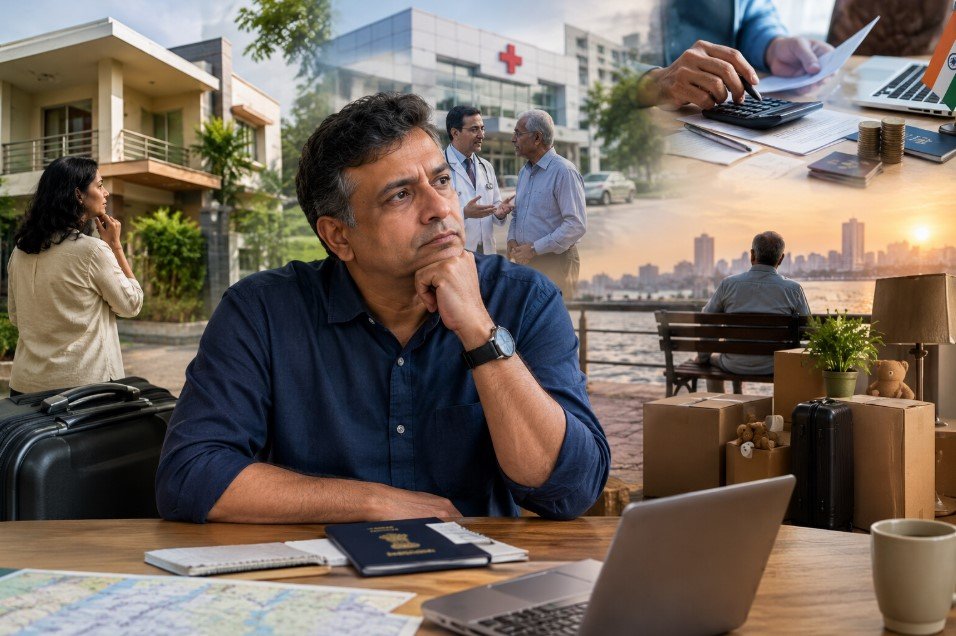
The first mistake is making the decision entirely around property.
The second is assuming healthcare will automatically be easy because India has many hospitals. Quality, distance, specialist availability, insurance, and emergency access still need to be checked.
The third is ignoring tax and banking changes.
The fourth is underestimating loneliness. Returning to a country does not automatically recreate the social life you had decades ago.
The fifth is moving everything at once. A staged move gives you time to test the location, sell or retain assets carefully, and understand how daily life actually feels.
A Retirement Decision Checklist for NRIs
Before making the move, answer these questions in writing:
- Where will I live for the first year?
- What happens if my health needs increase?
- Which hospital will I use in an emergency?
- What income will arrive each month?
- Which country will tax which income?
- How will I manage foreign and Indian accounts?
- What insurance will cover me after relocation?
- Who can help if I become temporarily dependent?
- What will my spouse or partner need?
- How will I stay socially active?
- What happens to my property and investments?
- What is my plan if I change my mind?
If the answers are unclear, the next step is usually more research, not an immediate purchase.
Is India Right for Every NRI Retiree?
No single retirement destination works for everyone.
Some people may prefer to remain abroad because their healthcare, social network, pension arrangements, or children are established there. Others may prefer a hybrid model, spending several months in India without making it their permanent residence.
For others, India may provide the combination of family access, familiar culture, healthcare options, lifestyle, and personal connection they want in later life.
The important comparison is not “India versus abroad” in the abstract. It is whether a specific Indian location works for your finances, health needs, relationships, legal status, and preferred way of living.
Conclusion
The growing interest in NRIs retiring in Indian reflects a broader shift in how people think about later life. Retirement is no longer only about stopping work. It is about choosing where healthcare, family, community, finances, and daily routines can work together.
Moving back to India after retirement can be rewarding, but it deserves the same careful planning as any major cross-border decision.
Start with a trial stay. Check healthcare. Review taxes and residency. Compare housing options. Build a realistic budget. Talk openly with family. Then decide whether India should be your permanent home, a seasonal base, or simply one part of your retirement plan.
FAQs:
It depends on healthcare, finances, family access, legal status, and preferred lifestyle.
Indian citizenship, OCI status, and visa rules determine what arrangements may apply.
Renting first can help test the location before making a large commitment.
Check hospitals, specialists, emergency access, insurance, pharmacies, and geriatric care.
Yes, options vary widely in services, pricing, care arrangements, and contract terms.
Build a cross-border income, expense, healthcare, tax, and housing plan.
Rules depend on asset type, country, tax status, and applicable Indian regulations.
Yes. Define realistic responsibilities rather than assuming family availability.
External Resources
National Programme for Health Care of the Elderly — Government of India information on geriatric healthcare services.
IRDAI health insurance FAQs — Official health-insurance regulatory guidance.
Income Tax Department guidance for non-resident individuals — Official information on NRI residential status and applicable returns.