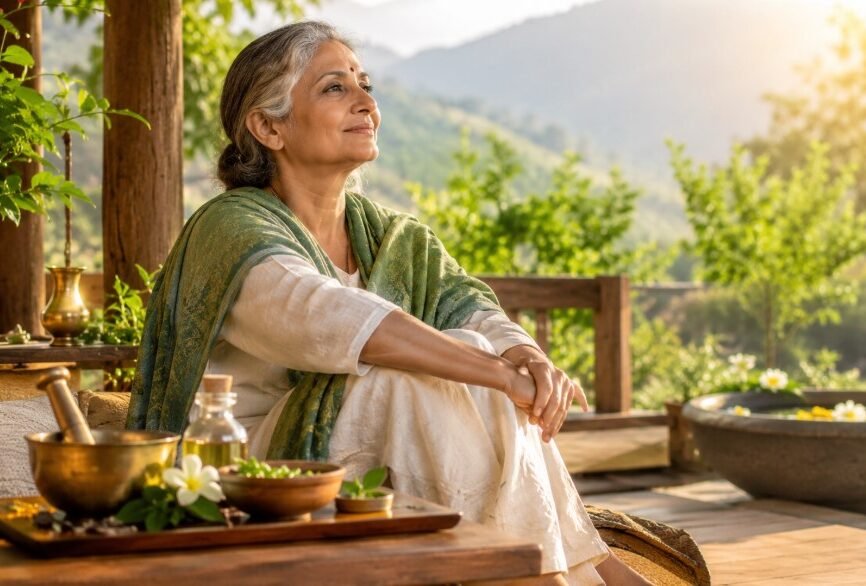
Everyone hopes to grow older with a clear mind, steady energy and a body that still feels like home. Ayurveda, India’s traditional system of health, has spoken about this for thousands of years. Its idea of ayurveda aging gracefully is not about hiding wrinkles or chasing youth. It is about staying balanced, active and content at every age.
This guide explains that view in plain words. You will learn how Ayurveda sees the ageing body, which daily habits matter most, and how seniors, busy families and Indians living abroad can start small. Every idea here is simple enough to try this week. Many of them are also easy to share with parents and grandparents.
Want more calm, practical reading like this?
How Ayurveda Understands Ageing
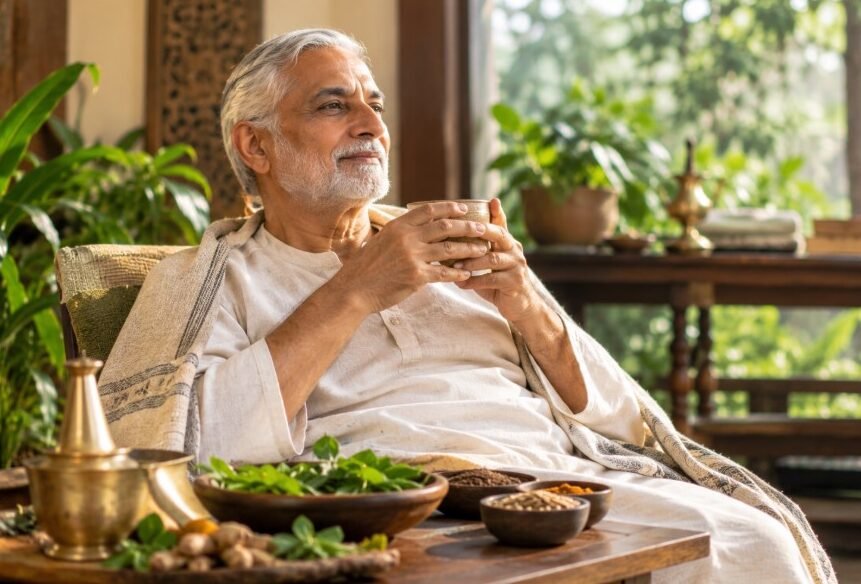
Ayurveda does not treat ageing as a disease. It sees it as a natural stage of life, just like childhood or youth. The old texts say every living being goes through it. What differs from person to person is how smoothly it unfolds, and that depends a lot on daily habits.
If you are new to the subject, DeshSansaar’s plain-language Ayurveda guidance explains what Ayurveda can and cannot do. Three ideas then help explain its view on ageing.
Agni: Your Digestive Fire
Agni is the body’s power to digest food, thoughts and experiences. When agni is strong, you absorb nutrients well and feel light after meals. With age, agni often slows down. Ayurveda protects it through warm, freshly cooked food and regular meal times.
Ojas: Your Inner Reserve
Ojas is the subtle essence of good health, immunity and calm. Good sleep, nourishing food, kind relationships and low stress are said to build it. Late nights, junk food and constant worry are said to drain it. Think of ojas as the glow that comes from feeling well, not from any product.
Dhatus: The Seven Body Tissues
Ayurveda describes seven tissues, from plasma and blood to muscle, bone and reproductive tissue. Each one nourishes the next. If digestion is weak, the deeper tissues, like bones and nerves, may not get enough nutrition. That is why Ayurveda starts with digestion first, not with creams or pills.
The Doshas and the Stages of Life
Ayurveda describes three energies called doshas: Vata, Pitta and Kapha. Each one leads a phase of life.
- Childhood is Kapha-led: growth, softness and a need for long sleep.
- Adulthood is Pitta-led: drive, strong hunger and ambition.
- Later life is Vata-led: dryness, lightness and constant movement.
Because Vata is linked with air and space, older adults may notice dry skin, stiff joints, lighter sleep, irregular bowels and a restless mind. Ayurveda’s answer is not complicated. To calm Vata, add warmth, moisture, routine and rest.
Each person also has a unique body type, called prakriti. Someone with a strong Pitta nature may age differently from someone with a Kapha nature. A qualified Ayurvedic doctor can help you find yours. Until then, the routine below is a safe, general starting point.
Building an Ayurvedic Anti-Aging Lifestyle
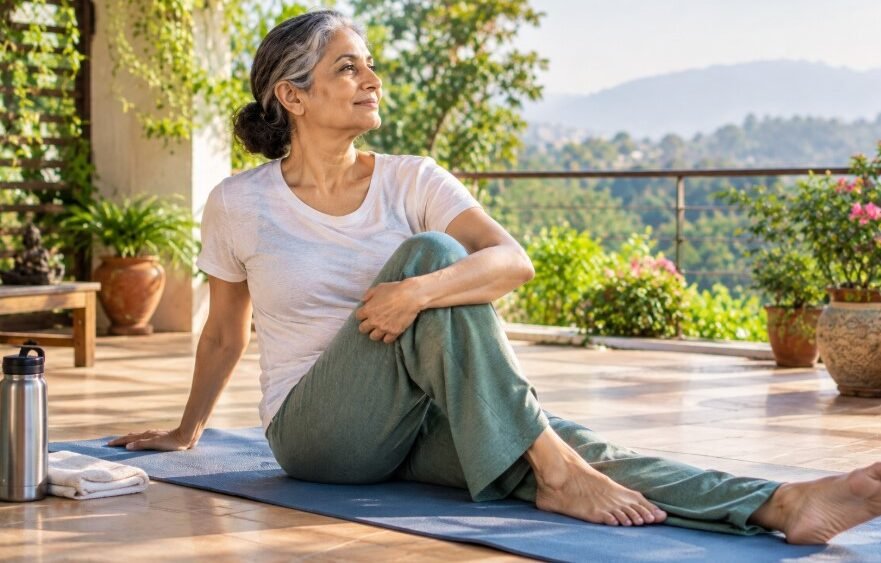
A good ayurvedic anti-aging lifestyle is not a strict programme. It is a set of small, repeatable habits. Here are the five pillars that matter most.
1. Follow a Steady Daily Routine (Dinacharya)
Routine is the quiet hero of Ayurveda. The body loves rhythm. Try this simple flow:
- Wake up close to sunrise.
- Drink a glass of warm water.
- Clean your tongue and brush gently.
- Move your body for 20 to 30 minutes.
- Eat meals at fixed times, with lunch as the biggest meal.
- Go to bed by 10 pm.
Even keeping two or three of these steady will help. Do not try to change everything at once.
2. Eat for Strong Digestion
Warm, cooked, lightly spiced food suits ageing bodies. Think moong dal khichdi, vegetable soups, a little ghee, seasonal fruit and cooked greens. Cumin, coriander, fennel and ginger support digestion without being harsh. Cold drinks, stale leftovers, deep-fried snacks and very dry foods can aggravate Vata. Eat slowly, sit down to eat, and stop before you feel stuffed.
3. Try Self-Massage with Warm Oil (Abhyanga)
Abhyanga means oil massage of the whole body. It is one of the best-loved Ayurvedic habits for dry skin, stiff joints and better sleep. Sesame oil is the classic choice. Warm it lightly, massage in long strokes on the limbs and small circles on the joints, then rest for ten minutes before a warm bath.
If you also want gentle, plant-based care for your skin as it matures, you can browse the natural skin care range by Advik Ayurveda, sorted by skin concern. It follows the same Ayurvedic idea of using natural ingredients.
4. Protect Sleep and Calm the Mind
Poor sleep makes tiredness worse at any age. Keep the bedroom dark and cool. Switch off screens an hour before bed. A warm oil rub on the soles of your feet can settle a busy mind. Ten minutes of slow breathing, such as alternate nostril breathing (Nadi Shodhana), also helps. Prayer, meditation or quiet journaling all count.
5. Move Gently Every Day
Ayurveda favours exercise up to about half your strength, not to exhaustion. Walking, yoga, gentle stretching and light strength work are all good choices. Morning light also helps set your body clock, which is one more reason to step outside early.
Live with the Seasons (Ritucharya)
Ayurveda asks you to adjust your habits as the weather changes. This matters more with age, because older bodies adapt slowly to heat and cold.
- Winter: favour warm soups, sesame oil massage and enough sunlight.
- Summer: eat cooling foods like cucumber, coconut water and buttermilk. Avoid the midday sun.
- Monsoon: keep meals light and freshly cooked to protect digestion.
- Autumn: drink enough water and keep a steady routine as the air turns dry.
You do not need a chart. Simply ask each season, what does my body need right now, warmth or coolness, lightness or nourishment?
Caring for Skin and Hair with Age
Skin becomes drier and hair thinner as Vata rises. Ayurveda suggests inner care first: enough water, healthy fats, good sleep and regular oiling. Gentle, natural products then support the outer care. Avoid harsh soaps and very hot showers, which strip natural oils.
Ayurveda for Senior Citizens: Practical Tips
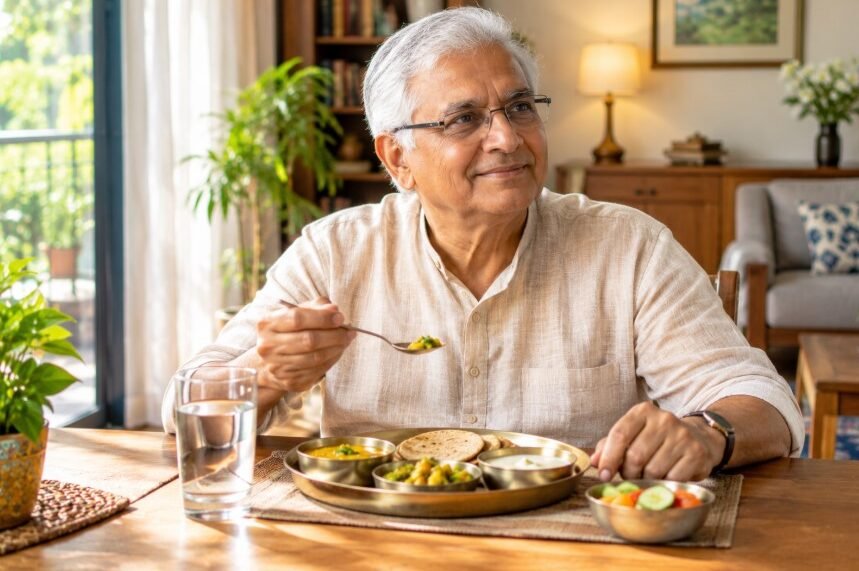
Older adults need care that is safe and realistic. These healthy aging Ayurveda tips are gentle enough for most people. If you have a health condition, please check with your doctor first.
Keep Meals Small and Warm
Smaller meals, taken more regularly, are easier on a slower digestive system. Prefer soft, well-cooked food. A bowl of warm dal, rice and vegetables often works better than a heavy, cold or raw meal. Sip warm water through the day.
Look After Joints and Bones
Warm oil massage, gentle stretching and a little morning sunlight can keep joints moving. Calcium-rich foods such as milk, curd, sesame and ragi are traditional favourites in Indian homes. Avoid sitting for long hours. Stand, stretch and walk every hour.
Keep the Mind Active and Connected
Ayurveda counts mental health as part of ageing well. Read, learn a hobby, tell stories to grandchildren, or join a community group. Loneliness weighs on the body as much as a poor diet does.
Stay Hydrated the Ayurvedic Way
Older adults often forget to drink water. Warm water and a light cumin, coriander and fennel infusion are soothing choices. Limit strong tea and coffee, especially in the evening.
Respect Rest and Routine
Seniors often sleep lightly, and that is normal. A short afternoon rest, a fixed bedtime and a calm evening routine work better than sleeping pills for many people. Keep the evening meal light and early. Avoid heated arguments, loud news and bright screens close to bedtime. Gentle music or a familiar prayer can help the mind settle. If sleep problems last for weeks, speak to a doctor.
Caring for an elder with a long-term condition?
Ayurveda Aging Gracefully for NRIs and Families Abroad

Life overseas brings its own challenges: cold winters, central heating, packaged food, long work hours and distance from parents. The good news is that Ayurveda travels well.
- Cold climates raise Vata. Use warm soups, sesame oil massage and layered clothing.
- Buy spices like turmeric, cumin and ginger from local Indian grocers and cook at home.
- Fix a weekly video call with elders in India. Company is medicine too.
- Share simple routines with your parents and read the same guides together.
If your parents live in India while you live abroad, DeshSansaar also explains how to support parents through a medical diagnosis from abroad.
Many NRIs ask how to blend Ayurveda with modern medicine. The answer is to use both wisely. Keep regular check-ups, take prescribed medicines, and tell every doctor about any herbs you use. Ayurveda works best as a partner to good medical care, not a replacement for it. If you need a check-up or a specialist during a visit home, Morning Sun lists trusted clinics for treatment across India.
Planning a longer visit to India?
Still deciding what kind of stay suits you?
Herbs Often Linked with Healthy Ageing
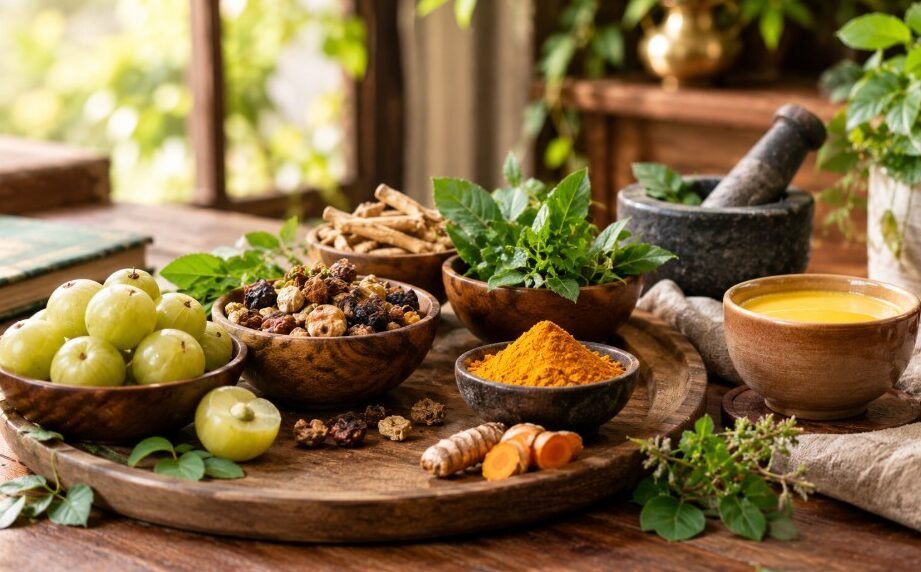
Some herbs appear again and again in Ayurvedic tradition:
- Amla: rich in vitamin C, eaten fresh, as murabba or as powder.
- Triphala: a blend of three fruits, used traditionally for gentle digestive support.
- Ashwagandha: often used as a calming, stamina-supporting herb.
- Brahmi: traditionally linked with memory and focus.
- Turmeric: used daily in cooking and in warm milk.
Please do not treat this list as a prescription. Herbs can interact with medicines for blood pressure, diabetes or blood thinning. Talk to a qualified Ayurvedic practitioner or your doctor before starting any of them.
Common Mistakes to Avoid
- Chasing quick anti-ageing fixes instead of building daily habits.
- Stopping prescribed medicines without medical advice.
- Over-fasting or harsh cleanses, especially for seniors.
- Ignoring sleep, stress and loneliness.
- Copying someone else’s routine without knowing your own body type.
A Simple Seven-Day Starter Plan
- Day 1: Fix your wake-up and bedtime.
- Day 2: Replace cold drinks with warm water.
- Day 3: Eat one fully warm, home-cooked meal at a fixed time.
- Day 4: Try a ten-minute oil massage before your bath.
- Day 5: Walk for 20 minutes in the morning light.
- Day 6: Spend ten minutes on slow breathing or prayer.
- Day 7: Note what felt good, and keep those habits.
What Modern Research Says
It helps to be honest here. Ayurveda is a traditional system, and large modern studies on its full approach are limited. Some herbs have been studied, with mixed results. However, many of its everyday habits match what health bodies already advise for older adults: regular sleep, balanced meals, daily movement, stress care and strong social ties. That overlap is a good reason to try these habits. Use them as gentle support alongside medical care, and stay open to your doctor’s guidance.
Final Thoughts
Ayurveda’s message on ageing is warm and practical. Protect your digestion, respect your sleep, keep moving, stay connected and eat food that nourishes you. You cannot stop time, but you can change how you feel as it passes. Start with one habit today and let it grow.
Ready to go deeper? Read Our Healthy Aging Series and pick your next habit, or browse all DeshSansaar articles. Have a question or a topic in mind? Contact the DeshSansaar team.
FAQs:
Ayurveda sees ageing as a natural, Vata-led stage that can be eased with balanced daily habits.
It cannot stop ageing, but good digestion, sleep, movement and routine may help you age comfortably.
Gentle habits are generally safe, but seniors should consult a doctor before using herbs or supplements.
Warm, freshly cooked, lightly spiced meals like khichdi, soups and cooked vegetables suit most older adults.
Yes. Cook simple Indian meals, keep a steady routine, try warm oil massage and stay socially connected.
Digestion and sleep may improve within weeks. Lasting benefits need consistent habits over months.