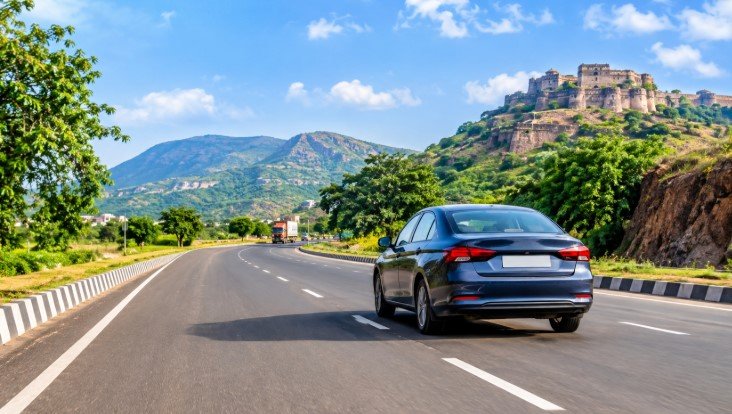
You have not driven in India for years. Now you land in Pune, Kochi or Delhi, and a cousin tosses you the car keys. Or you plan a family road trip and want a rental. Before you start the engine, one question matters. Are you allowed to drive?
Driving in India as NRI is possible. The catch is paperwork. The rules depend on your licence, how long you stay and the state you drive in. A small gap in your documents can mean a fine, a stuck rental or a rejected insurance claim. This guide covers the licence, the permit, car rental, key road rules and safety habits. Read it before you pack, and keep our NRI packing checklist nearby.
Can an NRI legally drive in India?
Yes, but only with the right papers. The Motor Vehicles Act, 1988 says every driver on a public road needs a valid licence. An Indian passport, an OCI card or Indian roots do not change that. A foreign licence alone is not a free pass either.
Short visit or long stay?
Most NRIs come home for a few weeks. For a short visit, a licence from your country of residence plus an international driving permit is the usual route. Many guides say this works for up to one year. After that, you need an Indian licence.
Transport is a state subject, so each regional transport office (RTO) applies the rules a little differently. Treat any single blog, including this one, as a starting point. Confirm the current rule on the official Parivahan Sewa portal or at the RTO of the state where you will drive. If your trip also involves treatment or a wellness stay, MorningSun’s travel and visa assistance team can help with the paperwork side of the journey.
Documents to carry every time
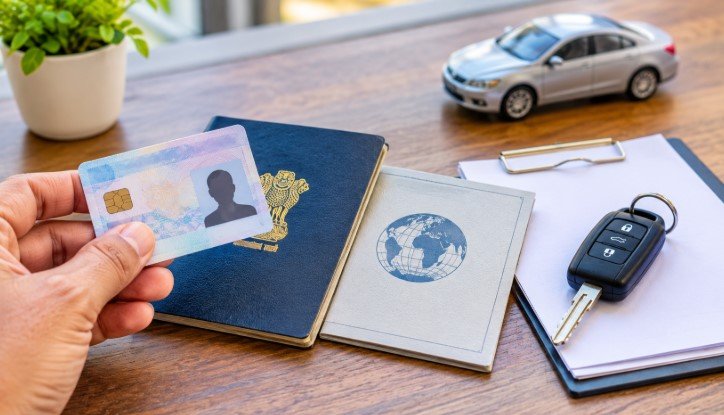
- Your original home-country driving licence, not a photocopy
- Your international driving permit (IDP)
- Your passport, plus your OCI card if you hold one. Our OCI card guide explains what it covers
- The car’s registration certificate, insurance papers and pollution-under-control certificate
- Your rental agreement, if the car is hired
Keep these in the car, not in your suitcase. Police checks happen at short notice, and “the papers are at home” does not work as an answer.
Planning a trip home?
International driving permit India: what it is and how to get it

An international driving permit is not a licence. Think of it as an official translation of your home licence. It works only when you carry it together with that licence. If you lose or forget one, the other loses its value.
India accepts permits that follow the 1949 Geneva Convention on Road Traffic. You must get yours in the country that issued your licence, and you must get it before you fly. Most countries issue it through a national motoring body or the transport department. Processing can take from a day to a few weeks, so apply early.
Quick tips on the permit
- Check the expiry date. Many permits last one year from issue, and some stop earlier
- Make sure it covers the vehicle class you plan to drive, such as a car
- Use only the official issuer. Fake “instant permit” websites target travellers every year
- Photograph both documents and email the images to yourself as a backup
Some visitors are told an English-language licence is enough on its own. Do not bet on it. Rental counters, police and insurers often ask for the permit, and arguing at the roadside costs time.
Staying longer? Switch to an Indian licence
If you plan to live in India for more than a year, ask your RTO about converting your foreign licence. Applications run through the state’s Sarathi system on the Parivahan portal. Some states have eased the process for foreign licence holders, for example by skipping the learner’s test. Practice varies and changes over time, so ask before you assume. Government offices can feel slow, and our guide to systems and bureaucracy in India sets realistic expectations.
Renting a car in India
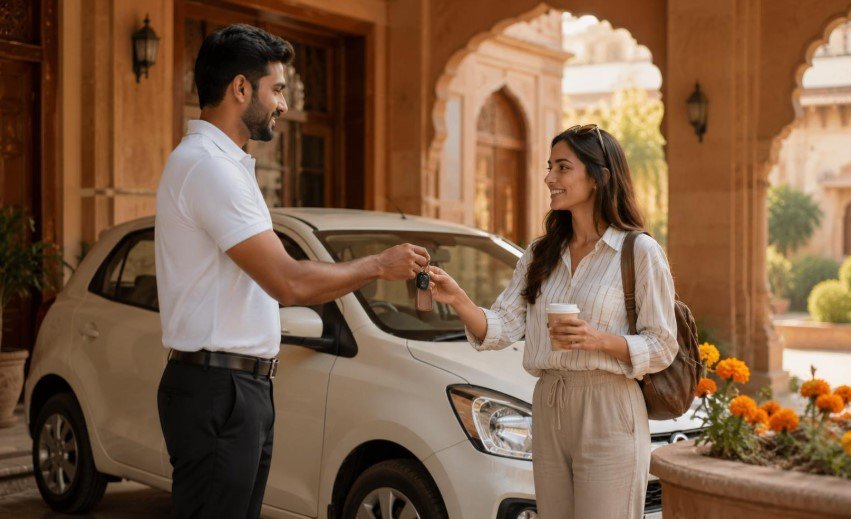
Renting a car in India is easy to arrange and easy to get wrong. Two main options exist, and each suits a different traveller.
Self-drive or car with a driver?
Self-drive rental gives you freedom. It suits quiet routes, small towns and travellers who already know Indian traffic. A car with a driver often costs a bit more, yet it removes stress. The driver knows local shortcuts, handles parking and manages tight spots. For long highway trips, narrow hill roads or a first visit after many years, many NRIs choose the driver.
What to check before you sign
- Which documents the company needs: passport, home licence, IDP and a card for the deposit
- What the insurance covers, and how much you pay first if there is damage
- Existing dents and scratches. Photograph or film every side before you leave the lot
- The fuel rule, kilometre limit and any night or toll surcharges
- A working FASTag on the windscreen, so tolls do not turn into cash-lane delays
- A spare tyre, a jack and a warning triangle
- The breakdown helpline number, saved in your phone
- Permission and extra tax for crossing a state border, if you plan to leave the state
Read the agreement fully, even when the counter is busy. Ask the staff to explain any clause you do not follow.
Avoid booking traps
Book only through a company’s own website or app, and keep every confirmation. Never send deposits to a personal bank account or wallet. Treat very cheap prices with suspicion. Our scams and red flags guide for NRIs lists the patterns to watch for.
Worried about fake bookings and surprise charges?
Driving rules for visitors you should know
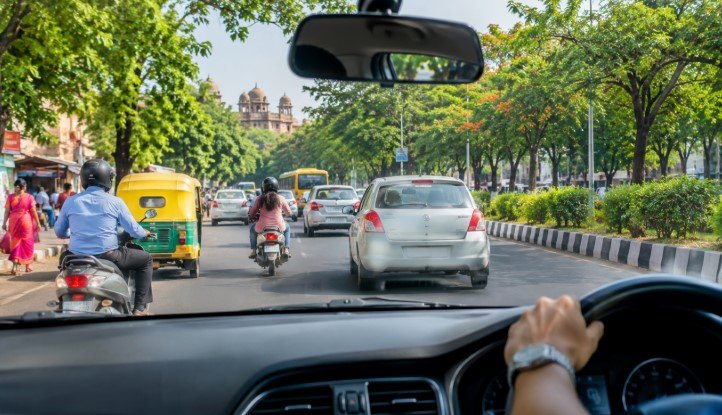
Keep left
Indians drive on the left, and the steering wheel sits on the right. If you live in the US, Canada or most of Europe, this feels strange at first. Spend your first half hour in a quiet area. At every turn, repeat a simple line to yourself: stay left, look right. At most roundabouts, traffic already inside the circle has the right of way.
Speed limits change by road
There is no single national number. Cars may reach 120 km/h on some expressways, but limits are lower on most highways and much lower in cities, school zones and hill sections. Follow the posted signs, not the speed of the car in front. Speed cameras are common on expressways and in big cities.
Seat belts, phones and alcohol
Wear a seat belt, and ask rear passengers to wear theirs too. Do not hold a phone while driving. Use a mount and voice directions instead. Never drive after drinking. Under the amended Motor Vehicles Act, a first drink-driving offence can bring a fine of up to ₹10,000, jail of up to six months, or both.
Tolls, fines and e-challans
Most national highway tolls are collected electronically through FASTag. Cars without a working tag usually pay a higher fee. The National Highways Authority of India publishes guidance on the system. Traffic fines often arrive as e-challans linked to the car’s number plate. If the car is rented, the company may pass the fine to you with a service charge, so ask about this before you pick it up.
What driving feels like on Indian roads
Rules on paper are one thing. The road is another. Expect motorbikes to slip through every gap, pedestrians to cross anywhere and horns to act as a form of conversation. A short beep usually means “I am here”, not “get out of my way”. Cows, dogs and handcarts can appear without warning, even on highways.
These habits help most visitors:
- Leave a bigger gap than you would at home
- Check your mirrors often, mainly on the left, where bikes pass
- Slow down well before speed breakers and unmarked bumps
- Avoid driving at night during your first few days
- Download offline maps in case the signal drops
- Do not argue with other drivers. Let small insults go
- Keep doors locked in slow city traffic
Travelling in festival season? Roads get crowded around Diwali and wedding dates. Read our guide to planning an India visit around festivals and add extra time to every route.
Do not drive while jet-lagged
Long flights wreck sleep, and tired drivers react slowly. Give your body a day or two before you take the wheel. Our ayurvedic tips for jet lag help you reset your sleep. If you collect a rental straight from the airport, ask a relative or a driver to take the first stretch.
Look after yourself on long drives
Sun, dust and hours of sitting take a toll. Carry water, take a break every two hours and use sunscreen on your arms. For sun-tired skin at the end of the day, a simple aloe vera gel from Advik Ayurveda is an easy, plant-based item to keep in your bag. If your road trip ends with a proper rest, you can browse verified Ayurveda resorts in Kerala on MorningSun.
Safety, insurance and emergencies

Check the insurance before you leave the lot. Third-party insurance is mandatory in India, and most rentals include it. Ask whether the policy also covers damage to the rental car, and what you pay first. Check your own travel cover too, because some policies exclude certain driving situations. Our guide to health insurance for NRIs in India explains the medical side.
Save these numbers before you start. 112 is India’s single emergency number, and the 112 India service connects police, fire and ambulance help. 1033 is the highway helpline of the national highway authority. Add your rental company’s line and one relative in India.
If you have an accident
- Stop, switch on your hazard lights and check everyone for injuries
- Call 112 if anyone is hurt or the road is blocked
- Take photos of the scene, the vehicles and the number plates
- Call your rental company or insurer as soon as you can
- Report the accident at the nearest police station, since insurers often ask for a report
- Do not sign papers you do not understand
Share your live location with family when you travel between cities. Families in India can also keep a plan ready for medical or roadside trouble. Our emergency planning guide is a good place to start.
Have parents or relatives in India who may need help in an emergency?
A quick checklist before you drive
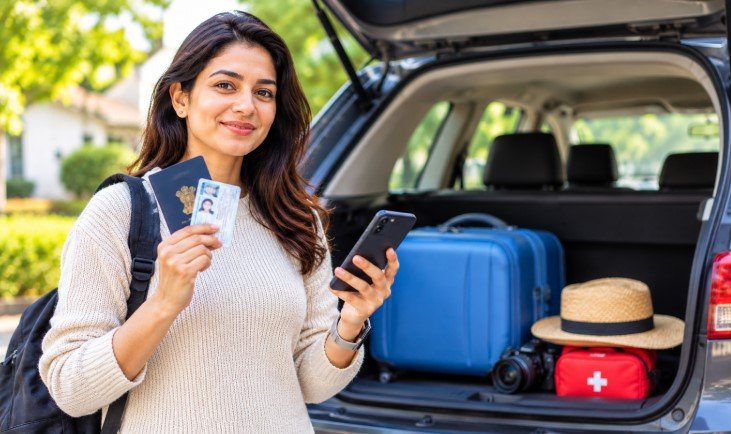
- Home licence and IDP in your bag, both valid
- Passport and OCI card with you
- Rental agreement, car papers and insurance checked
- Photos of the car taken before you leave the lot
- FASTag working, with balance loaded
- Emergency numbers saved in your phone
- Offline maps downloaded
- A rest day after your flight, with no driving on little sleep
Final thoughts
You can drive in India as NRI, and many people do it happily. Carry your home licence and permit, rent from a firm you trust, drive left and slow, and rest after the flight. When in doubt, hire a driver for your first trip. To understand how things work on the ground, browse India Explained for NRIs and how things really work in India.
Still have a question about your next India trip?
FAQs:
Yes, for short visits, usually with a valid international driving permit. Stays beyond a year need an Indian licence.
No. Carry it with your original home licence. An IDP only supports the licence.
Usually yes. Companies ask for your passport, home licence, IDP and a deposit. Rules differ by company.
Commonly cited as up to one year with an IDP. Confirm with the local RTO first.
The left. The steering wheel sits on the right side of the car.
It can be, with care. Start with short daytime trips, or hire a driver for long routes.
Pay it through the official e-challan system or traffic office. Rental firms may pass fines to you.
External resources
- Parivahan Sewa: official portal for driving licence and vehicle services
- Ministry of Road Transport and Highways: national road transport rules and notices
- National Highways Authority of India: FASTag and highway information
- Emergency Response Support System 112: India’s single emergency helpline
- Ministry of External Affairs: guidance for Indians abroad and Indian missions
- Incredible India: official tourism information for visitors