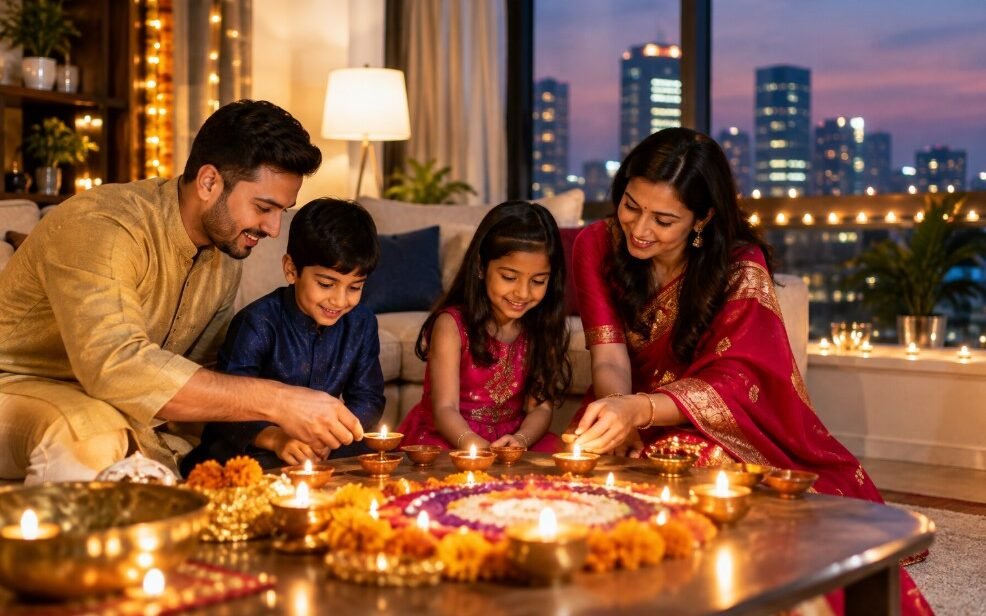
The first Diwali abroad is often the quietest one. There are no crackers in the lane, no neighbours knocking with sweets, and no cousins arguing over who lit the first diya. You place a lamp on the windowsill of a rented flat and feel the distance.
Then a message pops up in a local group chat. A community hall is hosting a Diwali night. You go, half unsure. Within an hour, a stranger is asking for your mother’s laddoo recipe, and you realise you are not the only one who feels this way.
That small moment explains why NRI community festivals abroad matter so much. They are not just parties. They are how scattered families become neighbourhoods and how newcomers find their first friends. This guide explains how that happens, what the groups behind the scenes really do, and how you can take part, whether you have lived overseas for twenty days or twenty years.
Why Festivals Matter More When You Live Far From India
At home, festivals arrive on their own. The market fills with marigolds, neighbours hang lights, and the whole street changes its mood. Abroad, nothing changes outside your window. A major festival can fall on a Tuesday while your colleagues talk about quarterly targets.
This gap is why Indian diaspora community events carry so much weight. Someone has to build the mood that India creates by default. When people do it together, the effect is far stronger than anything one family can manage alone.
Festivals Fill the Space Family Leaves Behind
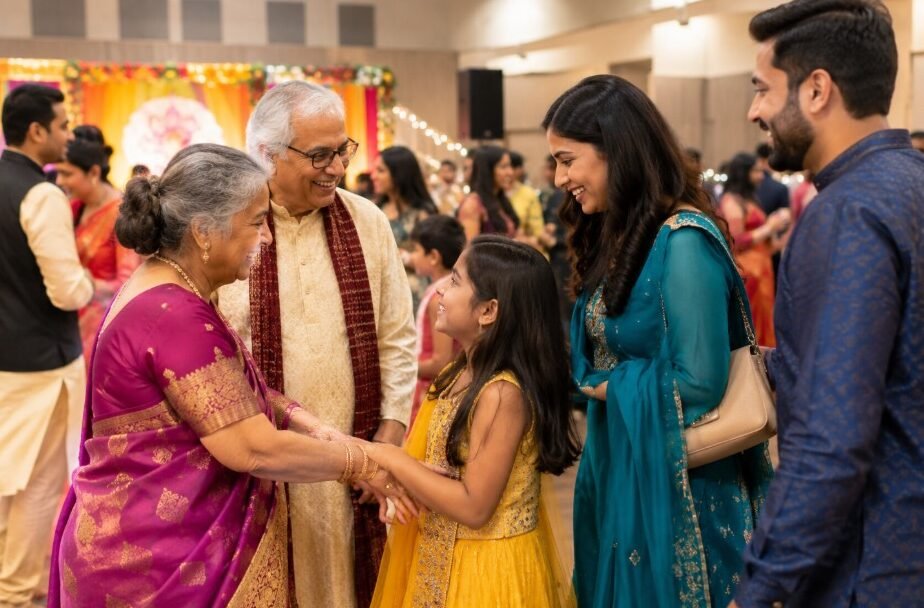
Many NRIs describe a feeling that is hard to name. It is not quite sadness. It is more like a missing background hum. A festival evening brings it back. You hear a familiar bhajan, smell tadka in the air, and watch elders bless the children. For a few hours, the distance feels smaller.
Community groups also stand in for relatives. A neighbour becomes “chacha”. A friend’s mother becomes “aunty” to your kids. These roles matter. They give children more adults to learn from and give parents someone to call during a rough week.
If grandparents cannot be there in person, include them by video. These practical ways of connecting grandparents and grandchildren across borders work well on festival days, when everyone is already in a sharing mood.
Festivals Give Children a Living Classroom
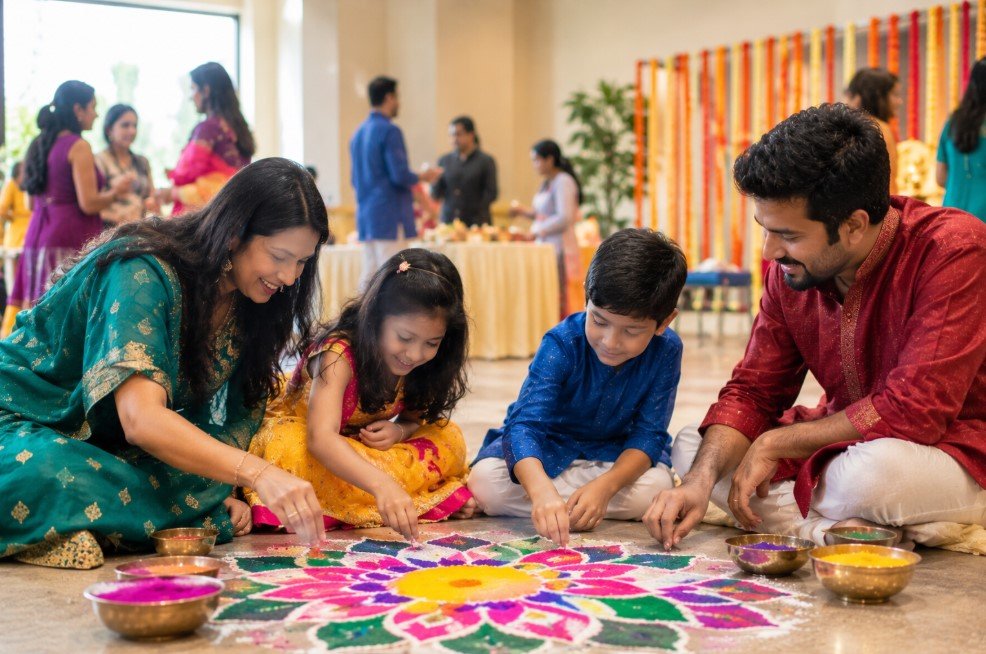
Children abroad often learn about India from screens and school projects. A festival turns that into something they can touch, taste and join. They dance in a garba circle, help make rangoli, or hold a diya for the first time.
To prepare your child before the event, read this parent’s guide to explaining Indian festivals to kids abroad. For the bigger picture of raising grounded children across two cultures, DeshSansaar’s pages on cultural identity for children and values and belonging for children abroad are a good place to start.
Want more real-life examples of how families stay rooted abroad?
How NRI Community Festivals Abroad Build Real Bonds
Festivals work as community glue because they give people a shared task, a shared date and a shared reason to show up. That is a powerful mix. Here is how it usually plays out.
Temples, Gurdwaras and Cultural Halls Become Anchors
Most cities with a visible Indian population have a few fixed gathering places. These may be a temple, a gurdwara, a mosque, a church with an Indian congregation, or a rented community hall. Festival days fill these spaces, and regulars soon recognise each other. A nod in the car park turns into a chat, then into an invitation to dinner.
Regional Festivals Connect People From the Same Roots
India does not have one festival calendar. It has many. Malayalis gather for Onam, Tamils for Pongal, Bengalis for Durga Puja, Punjabis for Baisakhi, Maharashtrians for Ganesh Chaturthi, and Gujaratis for Navratri. Abroad, people often find their language group faster through a festival than through any app.
At the same time, big pan-Indian events like Diwali and Holi bring different regions into one room. A Bengali family and a Telugu family may never have met in India. Abroad, they share a dinner table because they share a homeland. These festival celebrations abroad slowly teach people that “Indian” can mean many things at once.
Shared Food Does the Quiet Work
Almost every community festival runs on food. Each family cooks one dish and brings it to the hall. Volunteers serve. Kids carry plates. Nobody needs a formal introduction when everyone is passing around the same sweet. If you are curious why food holds such power for the diaspora, read about how Indian food traditions are evolving abroad.
Music and dance play a similar role. A garba night or a Holi dance floor has no language barrier. People who feel shy in conversation often relax once the rhythm starts. By the end of the evening, strangers are clapping in the same circle and planning to meet again next month.
Volunteering Turns Guests Into Friends
Setting up chairs, writing name tags, tuning the sound system or managing parking are small jobs. But they put people side by side for hours. That is when real friendships begin. Many long-time NRI friendships started with a shared task, not a shared conversation.
There is also a quiet emotional benefit. Taking part in festival celebrations abroad helps many adults feel less guilty about living far from ageing parents. They are still keeping the family culture alive, just in a new place, and that sense of purpose matters.
What NRI Cultural Associations Do Behind the Scenes
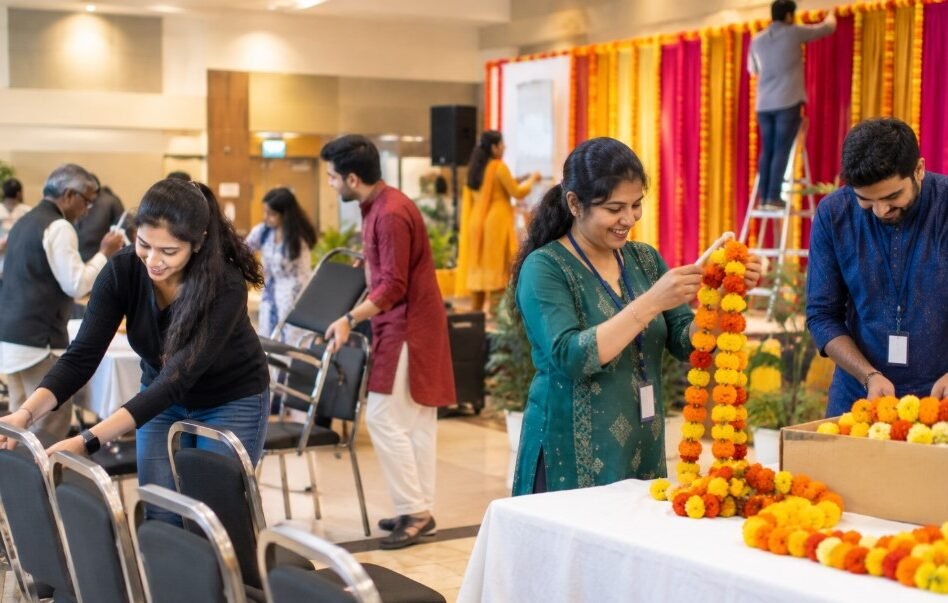
Every big festival you attend has a team behind it. NRI cultural associations are often run by volunteers who also hold full-time jobs. They do much more than book a hall.
- Arrange venues, permits and insurance, which can take months.
- Raise funds through tickets, local sponsors and community donations.
- Invite performers, musicians and local dance schools.
- Manage food stalls that meet local safety rules.
- Run children’s workshops on language, stories and crafts.
- Welcome students, new immigrants and families who have just moved.
Many associations also run weekend language classes and help new arrivals with everyday questions about schools, grocery stores and doctors. In that sense, a festival is only the visible tip. The year-round support is where the community truly forms.
A word of caution. Not every group or fundraiser is reliable. Before you donate or pay in advance, check who runs it, ask for a receipt, and see how long the group has existed. DeshSansaar’s guide to common NRI scams and red flags explains the habits of careless or fake organisers.
Indian Diaspora Community Events Open Doors Beyond the Community
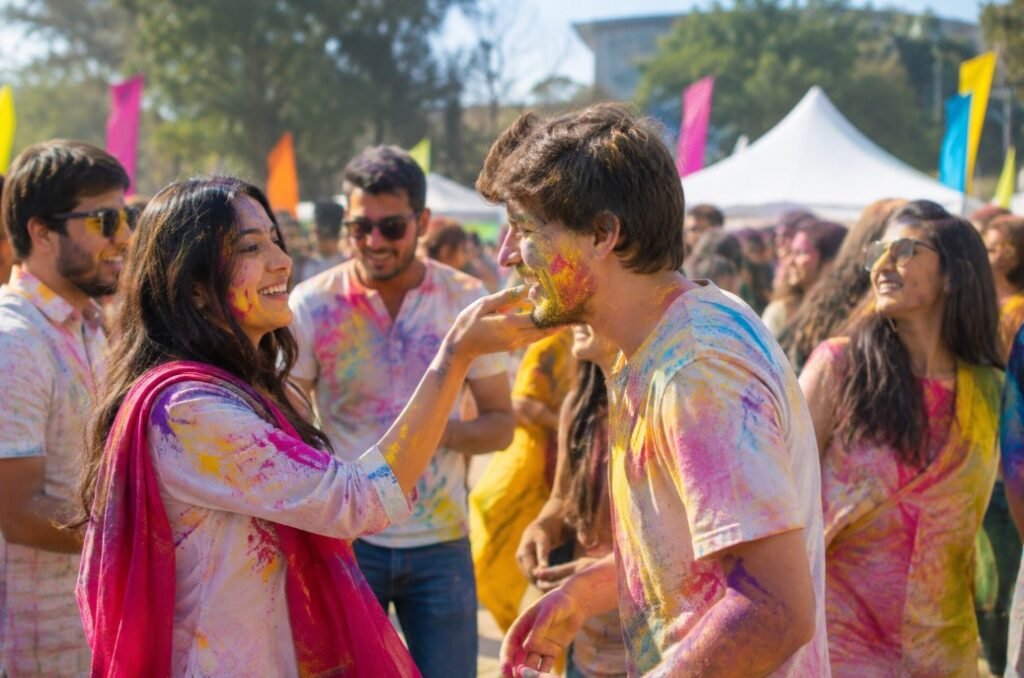
Good festivals do not close the door. They invite the wider city in. Colleagues, neighbours, classmates and local officials are often welcome, and many cities now host public Diwali, Holi or Navratri events that anyone can attend.
This matters for two reasons. First, it builds pride. When your child sees non-Indian friends enjoying the same dance, the tradition feels valued rather than strange. Second, it builds trust with the local community, which helps associations secure venues, permits and support.
Simple ways to include outsiders:
- Put short explanations of each ritual on signboards.
- Keep a clearly labelled vegetarian food counter.
- Offer a five-minute “Festival 101” welcome talk.
- Invite local schools to run a cultural stall.
For neutral background on how these festivals began, see this overview of Diwali and the story of Holi.
Festival Traditions That Also Care for Body and Mind
Many Indian festivals carry small wellness habits inside them. Diwali has long been linked with a pre-festival body massage and a herbal paste bath. Navratri fasting encourages lighter, simpler meals. Holi marks a seasonal shift. These customs travel well, even to colder countries.
Festival season abroad often means late nights, rich food and travel between cities. Dry winter air can also be harsh on skin. If you like the old Diwali ubtan idea, you can look at Advik Ayurveda’s saffron-based skincare range and add one item to your weekly routine. Do a patch test first, and speak to a doctor if you have a skin condition.
After a week of sweets and potluck dinners, your stomach may need a rest. These Ayurveda digestion and gut health tips offer gentle, everyday ideas that fit a busy NRI schedule.
Turning a Festival Into a Trip Back to India
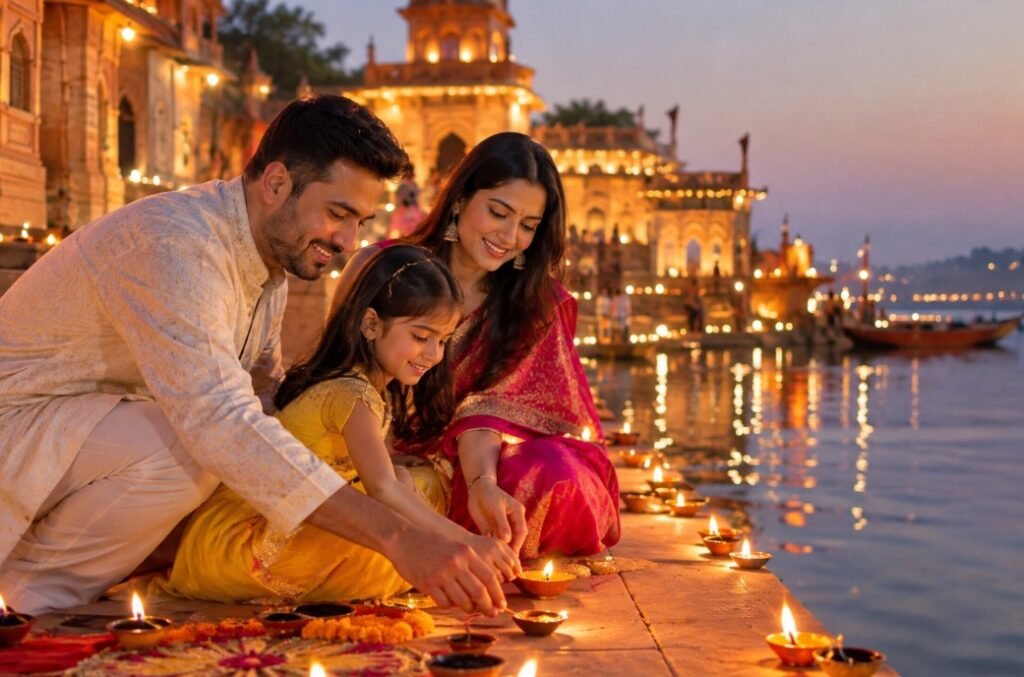
Many families plan a visit around a festival. Seeing Diwali in Jaipur or Durga Puja in Kolkata can change how a child feels about their heritage. It also reconnects you with relatives who may know you only through video calls.
If you want a structured way to do this, MorningSun lists cultural and heritage experiences in India that suit international visitors who want more than a standard tour. For family-focused planning, DeshSansaar’s page on India exposure trips for children explains what to think through before you go.
Curious how other families keep their roots strong while living overseas?
How to Start or Join a Festival Group Where You Live
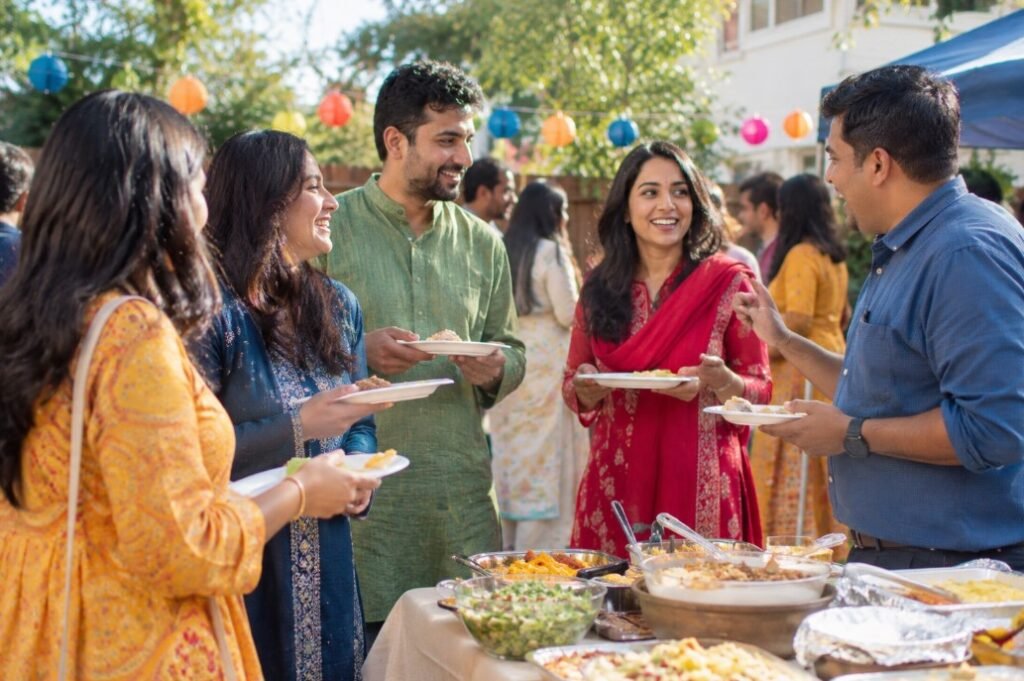
If You Are New to the City
- Search local social media groups using your city name plus “Indian community”.
- Ask the nearest temple, gurdwara or Indian grocery store about upcoming events.
- Attend one event as a guest and say yes to a single volunteer task.
- Follow up with two new people within a week.
Do not wait to feel “ready”. Most people at these events were new once, and most will be glad to see a fresh face.
If You Want to Start a Group
- Begin with a potluck at home or in a park.
- Pick one festival and one date.
- Share costs openly and keep simple records.
- Set clear, friendly rules for money, food and photos.
- Write down what worked and what did not.
- Add a second event only after the first one goes well.
Keep the group open to all regions, languages and religions. Communities grow faster when people feel welcome, not tested.
Common Problems and Simple Fixes
Even strong groups face friction. Here are the usual issues and sensible answers.
- Organiser burnout: rotate roles every year and thank volunteers in public.
- Cliques: assign two “greeters” whose only job is to welcome new people.
- Rising costs: share a plain one-page budget with members.
- Language gaps: use short bilingual announcements.
- Bored children: set up a kids’ corner with crafts and stories.
- Permit or noise trouble: talk to the venue and nearby residents early.
Festivals alone cannot replace everyday ties. Add small monthly meet-ups, such as a tea morning, a book circle or a weekend walk. These keep the bond alive between the big dates.
Bringing It Together
NRI community festivals abroad do more than mark a date. They give newcomers a first circle, give children a living link to India, and give adults a place to feel at home. Start small, show up often, and share the work. A single diya lit in good company can change how a new country feels.
Ready to keep your roots close?
Read More Community Stories on DeshSansaar, or plan a festival-season visit with MorningSun’s travel and visa assistance support.
FAQs:
Indian festivals organised by overseas Indians, usually at temples, community halls or public venues.
Diwali, Holi and Navratri are common, along with regional ones like Onam, Pongal and Durga Puja.
Check community social media groups, temples, Indian grocery stores and cultural association pages for notices.
Many do. Public festivals often invite neighbours, colleagues and friends to join, eat and learn.
Begin with a home or park potluck for one festival, share tasks, and grow slowly.