If you’ve read even a little about Ayurveda, you’ve probably run into three words: vata, pitta, and kapha. They sound complicated at first. They aren’t. Once you understand what each one means, the whole system starts to make sense. This guide has vata pitta kapha explained simply, without the jargon, so you can actually use the ideas — whether you live in India or you’re an NRI or foreigner exploring this from thousands of miles away.
What Are Doshas, Really?
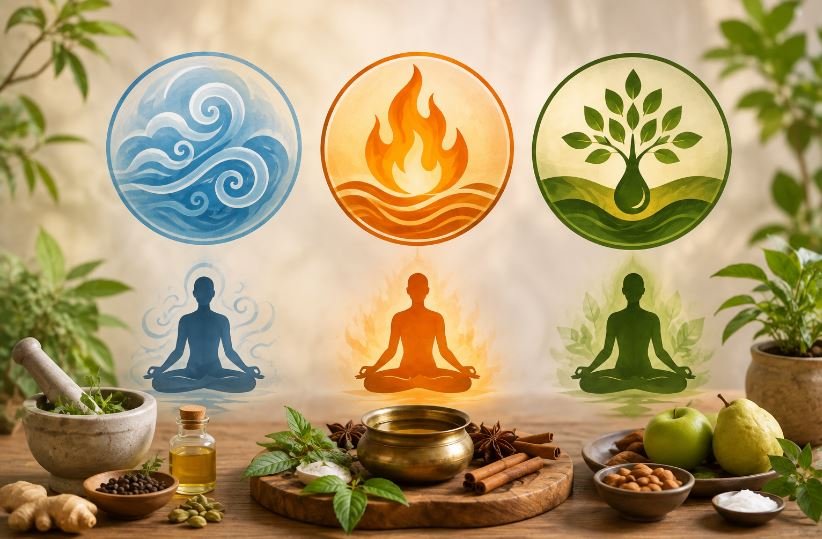
Doshas are Ayurveda’s way of describing patterns in the body and mind. Classical Ayurvedic texts group these patterns into three ayurveda dosha types, each linked to natural elements: air, fire, water, earth, and ether.
Every person carries all three doshas. Most people just have one or two that show up more strongly than the rest. That combination shapes things like your build, digestion, sleep pattern, and how you tend to react to stress.
Think of doshas less like a personality test and more like a lens. They give you a simple way to name patterns you may have noticed for years but never had words for.
The Three Doshas Explained Simply
Vata — Movement and Air
Vata comes from air and ether. It governs movement in the body — breathing, blood flow, nerve signals, even the movement of thoughts. People with strong vata often have a light frame, dry skin, and cold hands and feet. They think fast, talk fast, and get excited quickly.
Balanced vata shows up as creativity and quick thinking. Out of balance, it can look like anxiety, poor sleep, and irregular digestion.
Pitta — Fire and Transformation
Pitta comes from fire and water. It governs digestion, metabolism, and how the body processes food, heat, and information. People with strong pitta usually have a medium build, warm body temperature, and sharp focus. They’re often natural organisers — driven and quick to decide.
Balanced pitta shows up as strong digestion and clear thinking. Out of balance, it can look like irritability, skin inflammation, or acidity.
Kapha — Structure and Stability
Kapha comes from earth and water. It governs structure, lubrication, and immunity. People with strong kapha tend to have a solid build, smooth skin, and steady, calm energy. They’re usually patient and loyal.
Balanced kapha shows up as endurance and emotional steadiness. Out of balance, it can look like sluggishness, weight gain, or congestion.
Most people aren’t ‘pure’ vata, pitta, or kapha. You’re usually a mix, with one or two doshas standing out more than the third. That’s completely normal — it’s one of the most common patterns Ayurvedic practitioners see.
Why This Matters More When India Is Involved
For NRIs and foreigners exploring Ayurveda, dosha knowledge isn’t just cultural trivia — it’s a practical tool. Long flights, jet lag, unfamiliar food, and different work schedules can throw any dosha out of balance quickly. Someone naturally calm and grounded (kapha-leaning) may feel oddly anxious after a long-haul flight. Someone driven and fiery (pitta-leaning) may notice skin flare-ups in an unfamiliar climate.
Knowing your dominant dosha gives you a reference point. Instead of guessing why you feel off, you can look at sleep, food, and stress through a framework that’s been used for centuries. If you’re also weighing broader Ayurvedic care decisions from abroad, DeshSansaar’s Ayurveda guidance for NRIs and foreigners is a good next stop — it covers how to evaluate treatment claims and clinics responsibly, beyond dosha theory alone.
Common Signs Your Dosha Is Out of Balance
A dosha imbalance isn’t a diagnosis. It’s a signal worth paying attention to.
- Vata imbalance: restlessness, dry skin, irregular digestion, trouble falling asleep, racing thoughts.
- Pitta imbalance: irritability, acidity, skin rashes, feeling overheated, over-scheduling yourself.
- Kapha imbalance: low motivation, weight gain, congestion, oversleeping, feeling stuck.
These signs often show up during travel, season changes, or high-stress periods — exactly the situations many NRIs and foreign visitors face when navigating health decisions connected to India.
What Is My Dosha? How to Start Figuring It Out
The question “what is my dosha” comes up constantly once people start reading about Ayurveda. There’s no single blood test for this. Traditionally, a dosha assessment looks at physical traits, digestion patterns, sleep habits, emotional tendencies, and how your body responds to weather and stress.
A quick online quiz is a reasonable starting point, but it works best as a conversation starter, not a final answer. A guided assessment — done online or in person — adds context a quiz can’t: family history, current health conditions, and daily lifestyle.
Want a structured starting point instead of guessing?
It’s built for people exploring Ayurveda from outside India and gives you a starting profile you can build on with a practitioner later.
How Doshas Show Up in Daily Life
Once you have a rough sense of your dominant dosha, you can start noticing it in ordinary routines.
Diet
Vata types generally do better with warm, cooked, grounding meals. Pitta types tend to feel better with cooling foods and smaller portions of spice. Kapha types usually benefit from lighter, warmer, less oily meals. DeshSansaar’s guide to Ayurvedic diet principles for a healthier lifestyle abroad goes deeper into applying this once you’re living outside India, where regional ingredients aren’t always easy to find.
Sleep
Vata benefits from a steady, predictable bedtime. Pitta does well avoiding late-night screens and heavy dinners. Kapha usually benefits from an earlier wake-up time rather than long, heavy sleep.
Skin and Hair
Doshas influence skin type too. Vata skin tends to run dry, pitta skin tends to be sensitive and prone to redness, and kapha skin tends to be oilier. If skincare is part of what brought you here, Advik Ayurveda has a practical breakdown of choosing skincare based on your dosha, which pairs well with the basics covered in this guide.
Prefer a structured plan instead of trial and error?
Ayurveda Body Types Guide: Common Myths vs Reality
A lot of confusion around doshas comes from oversimplified content online. A few corrections worth knowing:
- Myth: Your dosha never changes. Reality: your baseline stays fairly constant, but your current state shifts with season, age, stress, and travel.
- Myth: One dosha is “better” than the others. Reality: each dosha has strengths and weak points — balance matters more than type.
- Myth: A quiz result is a medical diagnosis. Reality: dosha assessments are a wellness framework, not a substitute for medical evaluation.
That last point matters especially if you’re also researching how Ayurvedic treatment fits alongside conventional medical care in India — dosha awareness is a helpful lens, not a replacement for proper diagnosis.
Bringing This Into Practice
You don’t need to overhaul your life to use dosha awareness. Start small:
- Track a week of sleep, digestion, and energy levels.
- Notice patterns during stressful weeks or travel.
- Adjust one meal or bedtime habit at a time.
- Revisit a guided assessment if your circumstances change — new city, new job, new season.
Ready to move from theory to guided practice?
Still deciding whether Ayurveda deserves a serious look at all? DeshSansaar’s team is happy to help you think it through — reach out through our contact page with your specific questions.
Conclusion
Vata, pitta, and kapha aren’t mysterious once you strip away the jargon. They’re a practical language for noticing patterns in your body and mind. Once you can name what you’re experiencing, small adjustments get a lot easier — a warmer breakfast, an earlier bedtime, or a proper dosha consultation when you’re ready. Start simple, stay curious, and let the framework work for you.
FAQs:
Vata, pitta, and kapha — energies linked to air, fire, and earth that shape body and mind patterns.
Yes. Most people are a mix of two doshas, with one usually slightly stronger.
Your base type stays stable, but your current balance shifts with stress, season, and age.
No. It’s a wellness starting point, not a medical diagnosis or lab test.
Vata imbalance most commonly shows up as dry, rough, or flaky skin.
External Resources
For readers who want to explore the research and history behind Ayurveda further: