
You have made the decision. After years abroad, you are going home. Now the real work starts. Bank accounts need new labels. Your tax status will change. Furniture has to cross an ocean, and your children need school seats. This moving back to India checklist walks you through all of it, in the order it usually happens.
It is written for NRIs, PIOs and OCI holders who plan to settle in India for good. Use it as a working document. Print it, share it with your spouse and tick items off as you go. For wider reading, keep DeshSansaar’s guides hub open in another tab.
Why You Need a Moving Back to India Checklist
Leaving India took one flight and a visa. Coming back is harder, because several rule books apply at once. The Reserve Bank of India decides what happens to your bank accounts. The Income Tax Department decides how your income is taxed. Customs decides what your shipment costs. Each has its own dates and forms.
Miss one step and the cost is real. A late bank notice can become a foreign exchange violation. A badly chosen return date can cost you tax savings. A rushed shipment can mean duty on things you could have brought in at a lower rate. Careful planning a return to India removes most of these risks. Start six to twelve months out if you can.
Phase 1: Six to Twelve Months Before You Move
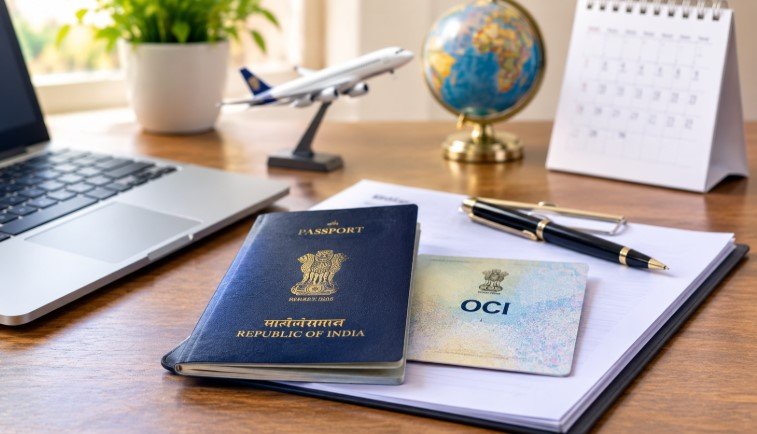
Your moving back to India checklist starts with dates and paperwork. These early choices shape every step that follows.
Pick your return date with tax in mind
Your return date is not only a travel choice. Indian tax law counts the days you spend in India in each tax year, which runs from 1 April to 31 March. You become a tax resident if you stay 182 days or more. You also become one if you stay 60 days or more and have spent 365 days or more in India over the previous four years. These tests sit in Section 6 of the Income-tax Act, 2025, which applies from 1 April 2026. The day-count logic is the same as before.
Returning a few months earlier or later can change which tax year you become resident, and how long your tax benefits last. Ask a chartered accountant to model two or three dates before you book flights.
Understand RNOR status
Most returning NRIs qualify as Resident but Not Ordinarily Resident (RNOR) for a limited time, usually two to three years. As an RNOR, you are generally taxed on income earned or received in India. Most foreign income stays outside Indian tax, with exceptions such as income from a business controlled from India. After the window ends, you become a Resident and Ordinarily Resident, and your global income is taxable here. Our NRI taxation basics guide explains the three statuses in plain language. The NRI tax basics hub lists related topics.
Check your core documents
Sort these before you leave your host country:
- Passport and OCI: Check validity and make sure details match across documents. Our OCI card guide for NRIs explains what the card allows.
- PAN: Keep it active. After you return, update your Indian address and residential status. See our PAN card guide for NRIs.
- Aadhaar: Apply or update it once you have an Indian address.
- Records: Keep originals and scans of degrees, work letters, marriage certificates, children’s birth certificates, school reports, tax returns and medical files.
- Driving licence: Check how to move to an Indian licence. Our guide on driving in India as an NRI covers the basics.
Planning your whole move?
Follow our step-by-step guides for returning families.
Phase 2: Money and Banking (Your NRI Repatriation Guide)

Money is where returning families make the costliest slips. This NRI repatriation guide section keeps the steps in the right order.
Redesignate your NRI accounts
Under foreign exchange rules (FEMA), you become a resident when you return to take up a job or business, or to stay for an uncertain period. There is no 182-day wait here. Your intention decides. From that point, you cannot keep running NRE, NRO or FCNR accounts as before.
- NRO account: It becomes a regular resident savings account.
- NRE account: You can convert it to a resident rupee account, or move the money into a Resident Foreign Currency (RFC) account.
- FCNR deposit: You get the same two choices. Ask your bank how the deposit will be treated at maturity.
NRE interest stops being tax-free once you are a resident under FEMA. So tell every bank in writing soon after you land. Carry your passport, visa or OCI details and proof of your Indian address. The RBI’s FAQs for returning Indians explain the options. For a refresher on account types, read our NRI banking and remittance guide.
Decide what stays abroad
FEMA generally lets you keep foreign currency, shares and property that you acquired while living abroad. So do not rush to sell. Do keep records of when and how you bought each asset. Once you are a Resident and Ordinarily Resident, you must report foreign assets and foreign income in your Indian tax return. Missing them can attract heavy penalties. Foreign retirement accounts, such as a US 401(k) or a UK pension, have special tax treatment for returnees. Get specific advice before you withdraw or transfer anything.
Build your Indian financial footprint
Your credit history abroad does not travel with you. Open a resident savings account, apply for a credit card early and pay bills on time. A local score then starts to build. Review your investments too. Our NRI investment options guide shows where money can go. Also keep six months of living costs in an easy-access account as a landing buffer.
Phase 3: Shifting Household to India

Shifting household to India is part logistics and part emotion. Take it in three steps.
Decide what to ship, sell or store
Walk through every room and make three piles. Ship what is hard to replace: books, documents, good cookware, family photos and special furniture. Sell what is cheap to buy locally, such as bulky sofas, mattresses and basic electronics. Store or gift the rest. Shipping is charged by volume, so each extra box adds up. Get at least three quotes from licensed international movers. Ask each one to list exactly what is included at your door in India.
Understand customs and Transfer of Residence
India’s Baggage Rules, 2016 include a Transfer of Residence concession for people moving back. It allows used personal and household items in at reduced or nil duty. The benefit depends on how long you lived abroad. Value limits and excluded items apply, and goods that do not travel with you must arrive within a set time. New, unused items usually do not qualify. Cars follow a separate process, so do not assume a vehicle can ship with the rest.
Keep a detailed packing list with descriptions and values, plus your passport and visa history. Read the rules on the CBIC Baggage Rules page and confirm current limits with your mover or a customs broker before you pack.
Think about voltage, pets and medicines
India’s mains supply is 230 volts at 50 hertz. Many appliances built for 110 volts will not run safely on a plain plug adapter. Check labels before you ship a microwave or a hair dryer. If a pet is coming with you, start early, because import permits and health records take time. Carry a few months of regular medicines with prescriptions, and find an Indian doctor who can continue them.
Phase 4: Health, Family and School

Health cover and medical records
Your overseas health plan will probably not cover you once you live in India. Buy an Indian policy before you land if you can. Many policies apply waiting periods for pre-existing conditions, so an early start helps. Ask your doctors abroad for summary reports, scan copies and vaccination records. Our guides on health insurance for NRIs in India and the healthcare reality in India show what to expect.
Routines also shift after a big move. If you want structured, remote support while you settle in, MorningSun’s online lifestyle programmes for NRIs cover diet, sleep and stress, and its family wellness plans cover the whole household.
Settling your family’s health routine?
MorningSun offers online Ayurveda-based lifestyle support built for NRIs.
Children and schools
Indian schools have admission windows, often months before the term starts, and age cut-offs for each class. Boards also differ: CBSE, ICSE, state boards or IB. Ask each school which papers it needs, such as a transfer certificate, past report cards and a birth certificate. Children may need time to adjust to a new mix of languages, longer homework hours and a different teaching style. Our pieces on parenting across cultures and second-generation NRIs reconnecting with their roots offer practical ideas.
Parents and legal paperwork
If your return is partly about your parents, read our guide on NRIs returning to India for elder care. It covers care models and costs in detail. Also sign key papers while you still have time to think: a will and, where needed, a power of attorney. Our power of attorney guide explains how.
Phase 5: Your First 30 Days Back

Week one
- Tell all your banks in writing and redesignate NRI accounts.
- Get an Indian SIM and link it to your bank, PAN and Aadhaar.
- Update your PAN with your Indian address and residential status.
- Register with a family doctor and a nearby hospital.
- Check your shipment against the packing list the day it arrives.
Housing and scams
Rent for the first six months before you buy. It lets you learn the neighbourhood, the commute and the school quality. When you do buy, check the builder’s RERA registration and ask a lawyer to verify the title. Returnees attract fake brokers, inflated “NRI prices” and advance-payment frauds. Our scams and red flags guide lists the warning signs.
Settle your body and mind
Heat, dust, new water and a different food routine can hit hard in the first months. Skin and hair often react first. Many returnees switch to gentle, plant-based care and see how it feels. You can browse Advik Ayurveda’s skin care range or the hair care products on the Advik Ayurveda home page. Low mood and homesickness for your old life are normal too. Read our piece on coping with homesickness as an NRI, and give yourself time. Reverse culture shock usually eases after a few months.
Climate or water change hitting your skin?
Try gentle, plant-based Ayurvedic care from Advik Ayurveda.
Moving Back to India Checklist at a Glance

- 6-12 months out: Model tax dates, check passport, OCI, PAN, gather records, book school visits.
- 3-6 months out: Collect mover quotes, start an Indian health policy, plan which assets stay abroad.
- 1 month out: Finalise the packing list, carry medicines and prescriptions, arrange rental housing.
- Arrival week: Redesignate bank accounts, update PAN, get Aadhaar, find a doctor.
- First 30 days: Settle school, driving licence, credit card, and a calm daily routine.
Common Mistakes Returnees Make
- Running NRE or NRO accounts long after returning.
- Ignoring how the return date changes tax status.
- Shipping everything, then paying to store or dispose of it.
- Skipping health insurance until the first claim.
- Selling foreign assets in a hurry, or forgetting to report them.
- Cutting every tie abroad too early, with no fallback plan.
Conclusion
A good moving back to India checklist turns a stressful move into a series of small, doable tasks. Fix your tax date, redesignate your accounts, ship only what matters, protect your health and give your family time to adjust. Good planning a return to India is mostly about doing the right thing in the right order. Rules and limits change, so confirm details with a chartered accountant and the official sources below before you act.
Ready to start planning?
Our guides break the move into clear, practical steps.
This guide is for general information and is not legal or tax advice. Read our legal disclaimer.
FAQs:
Ideally six to twelve months ahead, so tax planning, shipping, school admissions and insurance have enough time.
You must redesignate it soon after return, either to a resident account or by moving funds to an RFC account.
A temporary tax status for returnees, usually two to three years, when most foreign income is not taxed in India.
Partly. Transfer of Residence rules give concessions, but limits, exclusions and conditions apply. Check current rules before shipping.
Generally yes, if acquired while you lived abroad. Report them in your Indian tax return once you are ordinarily resident.
Banking and tax rules follow your residency, not your passport. Keep your OCI valid and confirm details with an adviser.
External Resources
- Reserve Bank of India: FAQs on accounts for returning Indians
- CBIC: Baggage Rules, 2016
- Income Tax Department of India
- Government of India: OCI services portal
- Passport Seva (Ministry of External Affairs)
- UIDAI: Aadhaar services
- IRDAI: Insurance Regulatory and Development Authority of India
- CBSE: Central Board of Secondary Education